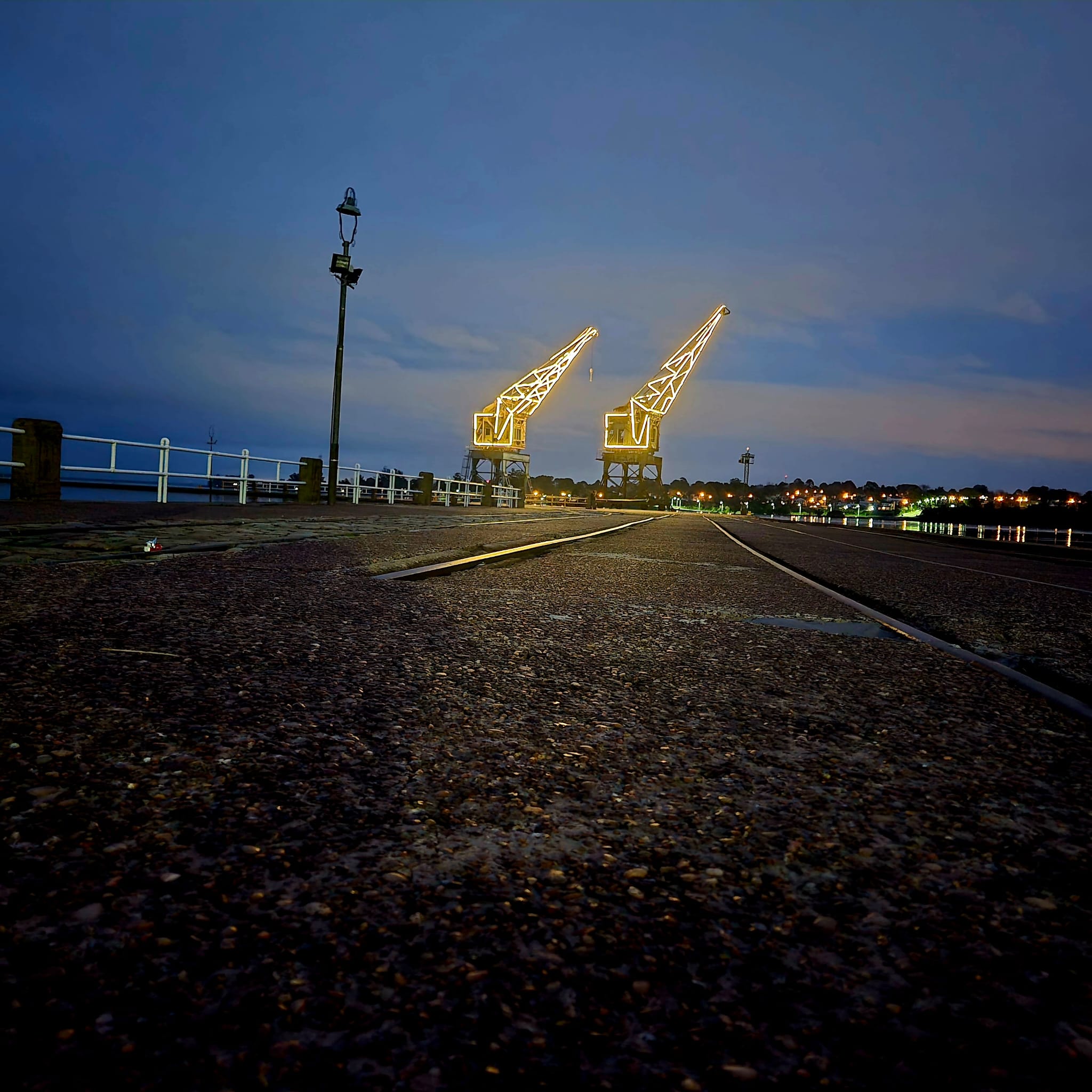
Stand on the riverfront in Salto and the low skyline across the water is another country. Concordia is Argentina's citrus capital the way Salto is Uruguay's, and the two cities have looked at each other across the Río Uruguay for two hundred years. You can have lunch there and be back in Salto for the hot springs. This is how to do it, day by day, because the way across depends on the day of the week.
Which day, which way
There are two public ways across and neither runs every day. The lancha, a small passenger boat from the Puerto de Salto, crosses in ten minutes on Monday, Wednesday and Friday: it leaves Salto at 9:00 and 16:00 and comes back from Concordia at 9:30 and 16:30, for about US$10 a person, return, paid at the port. The bus goes the long way round, over the Salto Grande dam, in about an hour including the border stop, for about US$6–7: Chadre leaves Terminal Salto Shopping at 7:15 and returns from Concordia's terminal at 11:15 on Monday, Tuesday, Thursday, Friday and Saturday; Flecha Bus leaves Salto at 19:30 and returns from Concordia at 18:15 on Monday, Friday and Saturday.
| Day | Salto → Concordia | Concordia → Salto |
|---|---|---|
| Monday | Bus 7:15 · Lancha 9:00 · Lancha 16:00 · Bus 19:30 | Lancha 9:30 · Bus 11:15 · Lancha 16:30 · Bus 18:15 |
| Tuesday | Bus 7:15 | Bus 11:15 |
| Wednesday | Lancha 9:00 · Lancha 16:00 | Lancha 9:30 · Lancha 16:30 |
| Thursday | Bus 7:15 | Bus 11:15 |
| Friday | Bus 7:15 · Lancha 9:00 · Lancha 16:00 · Bus 19:30 | Lancha 9:30 · Bus 11:15 · Lancha 16:30 · Bus 18:15 |
| Saturday | Bus 7:15 · Bus 19:30 | Bus 11:15 · Bus 18:15 |
| Sunday | Taxi over the bridge only | Taxi over the bridge only |
Bus times from the official departures and arrivals boards of Concordia's terminal, checked on 7 September 2026; the lancha from its operator. Both can change with river conditions and holidays, so confirm the day before. Visit Salto can book the lancha for you; the buses are bought at the terminal.
So the shape of the day is set by the calendar. Monday, Wednesday and Friday are the classic version: lancha out at 9:00, a full day, lancha back at 16:30. On Saturday, or on Friday if you prefer the road, the best value is the bus both ways: out at 7:15, home on the 18:15, a full day for about US$14. On Tuesday and Thursday there is no afternoon bus and the 11:15 return is too tight for a real look, so it is the 7:15 out and a taxi or remise back over the dam, about 35 km, at whatever hour suits you; agree the price before you get in.
The border, in plain terms
It is an international crossing, small as it feels. On the lancha, immigration is done at each dock; on the bus, everyone gets off at the dam for a few minutes. Citizens of Mercosur countries cross with their national ID; everyone else needs a passport. Argentina and Uruguay are on the same time all year, so nothing to adjust. Money is the other change: Concordia runs on Argentine pesos, cards are widely accepted in restaurants and museums, and a little cash helps for taxis and kiosks. Your Uruguayan pesos are not much use across the river, and vice versa.
The castle where the Little Prince was born, almost
Concordia's one unmissable place is a ruin. Castillo San Carlos was built in 1888 by a French industrialist, Édouard Demachy, in a park of more than seventy hectares above the river. In October 1929 a young pilot flying the mail for Aeroposta put his plane down in its gardens with engine trouble and stayed a few days with the family renting the house. His name was Antoine de Saint-Exupéry. The palos borrachos in the garden, the fox the family had tamed and the girls' riding clothes all turn up, changed, in The Little Prince fourteen years later. The castle burned and stood empty for decades; it has been restored as a museum and the park is one of the best places in the region to walk. Open daily 9:00 to 19:00; the park is free and the museum charges a few thousand Argentine pesos, a little more for foreigners. From the Concordia terminal it is a short taxi ride.
The dam you crossed on the bus
The Salto Grande hydroelectric complex is the reason the bus exists: the road runs over the dam. It is binational, built between 1974 and 1979 by both countries, and it gives free guided visits every day of the week in the morning, from the Argentine side about 15 km north of Concordia: museum first, then the turbine hall and the viewpoints, about two hours in all. Individuals just turn up; groups book ahead. If you came by lancha, a taxi to the dam and back is the usual way.
Riverfront, palace, cathedral
The old costanera by Parque Mitre is the 1930s one, all balustrades and river light; the newer Nebel costanera runs north. Between them the centre is compact: Plaza 25 de Mayo with the 1899 cathedral, and the Palacio Arruabarrena (1919), a French mansion of forty rooms that houses the regional museum, free and open weekday mornings. Concordia was Argentina's third port at the end of the nineteenth century and the buildings remember it.
Hot springs, the other side's version
Concordia has its own thermal water, from the same Guaraní aquifer as Salto's. Termas de Concordia, about 10 km north of the centre, has pools between 37 and 42 °C on fifteen hectares with a lake and an aerial park, open daily until 22:00; Termas del Ayúi combines pools with a water park and is open late at weekends. They are good, and a fair comparison for anyone who has soaked at Daymán. In summer the beaches on Lago Salto Grande, 18 km out, fill with families.
Where to eat
Argentine lunch is late and long, and the thing to order is a bife de chorizo: a thick cut of sirloin off the grill, with fries and a glass of Malbec. It is the one meal that is simply better on that side of the river, and any parrilla in the centre will do it well. On the river, El Ciervo does river fish and pasta at midday and again from 20:00. In the centre, Il Forno makes sourdough pizza all day, and Jacinto Cocina, run by a MasterChef finalist, does a bistro menu with a long wine list from Wednesday to Sunday. Coffee and medialunas are everywhere around the plaza. If you take the 7:15 bus, breakfast in Concordia is the reward.
Two suggested days
The lancha day (Monday, Wednesday or Friday). Port of Salto at 8:30, across at 9:00. Taxi to Castillo San Carlos and a slow hour in the park. Back to the centre for the costanera and the plaza, lunch at 13:00. Afternoon at the museum or, if you want the big machine, the dam. Concordia dock at 16:00, lancha at 16:30, Daymán hot springs by 18:00.
The bus day (Saturday, or Friday by road). Terminal Salto Shopping at 7:00, bus at 7:15, breakfast on Plaza 25 de Mayo by 8:30. The castle and its park in the morning, the costanera before lunch, a long lunch with a bife de chorizo, the palace or the dam in the afternoon, and the 18:15 bus home, in Salto by 19:15. On a Tuesday or Thursday the same day works with a taxi back over the dam instead of the evening bus.
“You can see it from the costanera. Go and have lunch there.”
Coming from Argentina instead? The same boats and buses work in reverse: Getting to Salto has every route from Buenos Aires and Córdoba. And the lancha has its own story: Ten Minutes Across Eternity.
Sources: departures and arrivals boards of the Terminal de Concordia (checked 7 September 2026); Salto Grande, visitas; Entre Ríos Turismo; La Nación, Revista Lugares, “La ciudad que combina arquitectura, una gran represa y el paso de un escritor famosísimo” (24 August 2026). Prices in Argentine pesos move quickly; treat them as orders of magnitude.
Questions about the crossing or the day? Message us on WhatsApp using the green button. We can book the lancha for you on its operating days.