
Home / Experiences / Salto Cemetery Walk
Salto Cemetery Walk
An open-air museum, and one of the oldest necropolises in the north of Uruguay. The Central Cemetery was laid out in 1853 by master builder Antonio Invernizzi and filled, over the decades that followed, with the marble of a port city that was receiving Spanish and Italian immigrants by the shipload. More than a hundred of its panteones are National Historic Monuments. The phrase open-air museum is not a slogan: it is how the Sendero Sensible, the internationally awarded project of anthropologist Patricia Martínez of the Red Uruguaya de Cementerios Patrimoniales, reads this place. This guided walk reads it the same way: the sculptors, the styles and the symbols, because here everything means something. The Greek word behind cemetery, koimeterion, means a dormitory: the place where one sleeps. That is the tone of the walk.
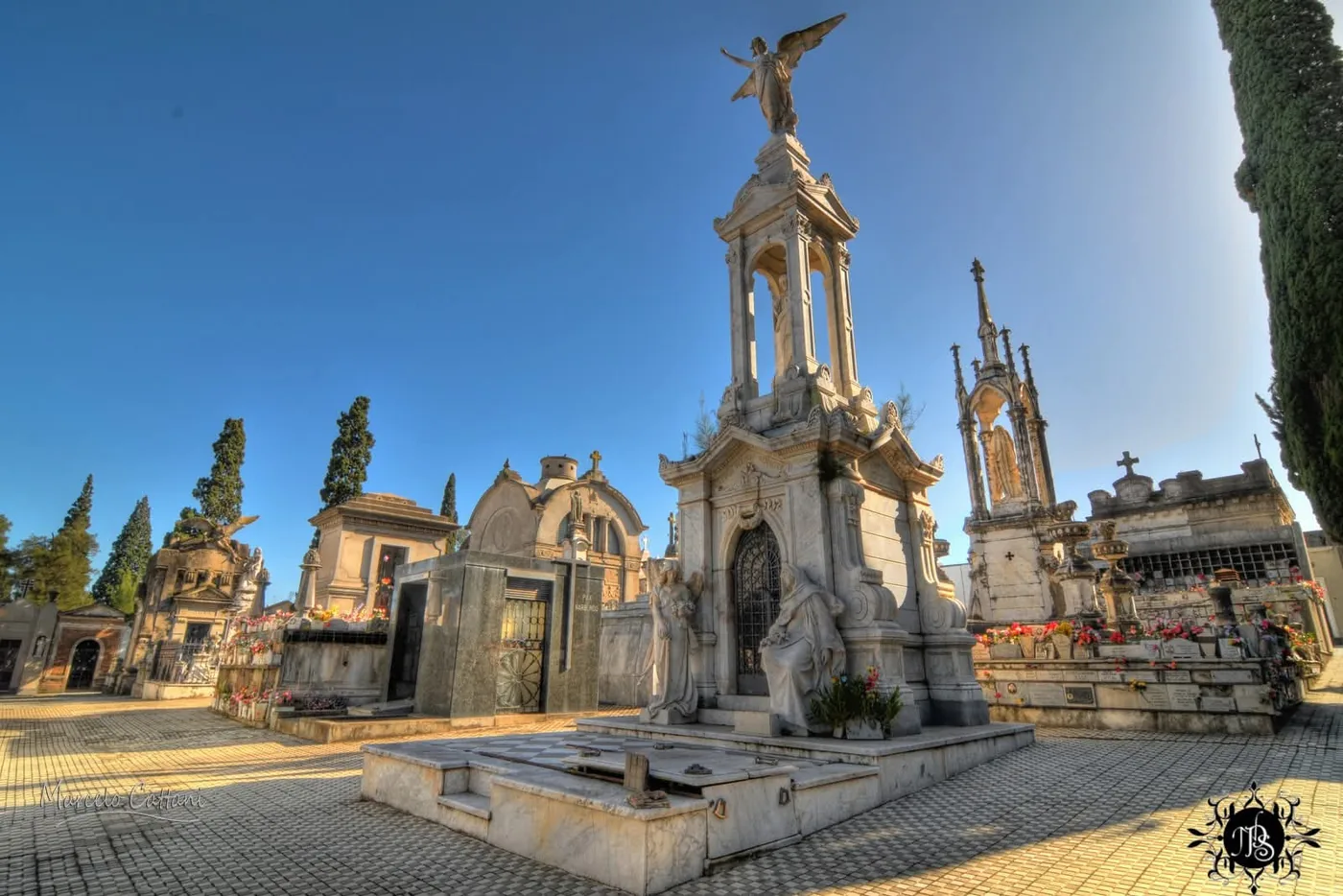
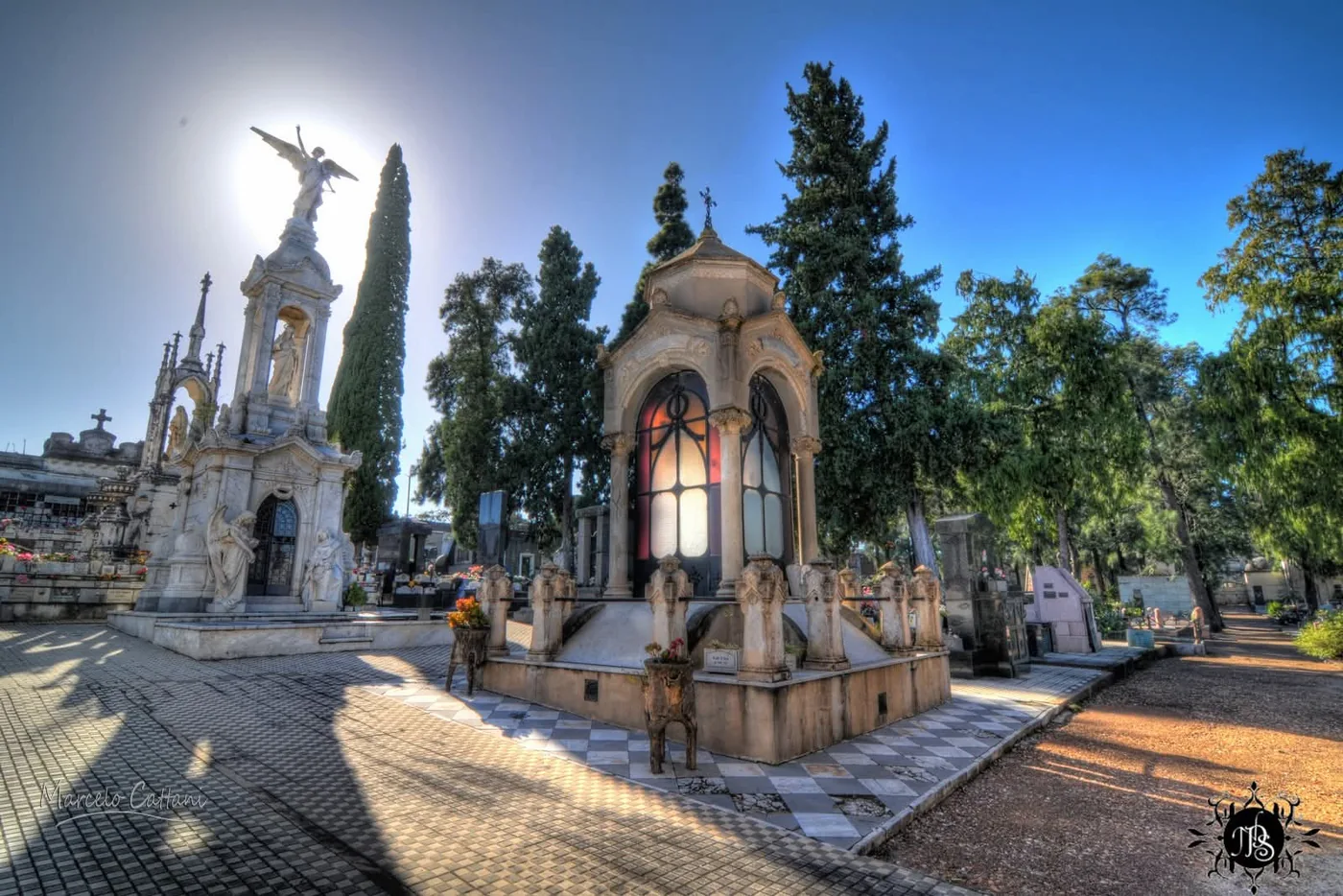
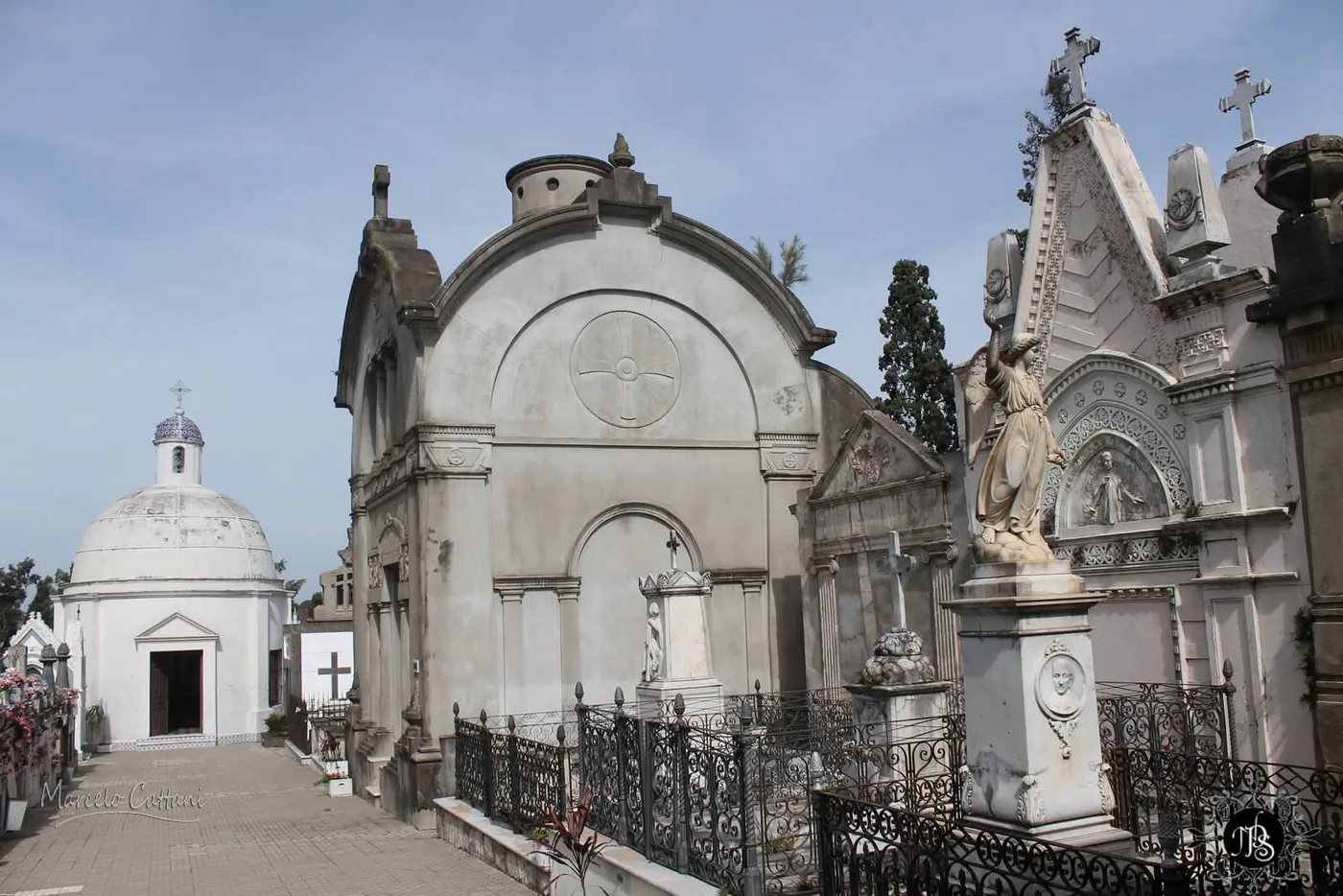
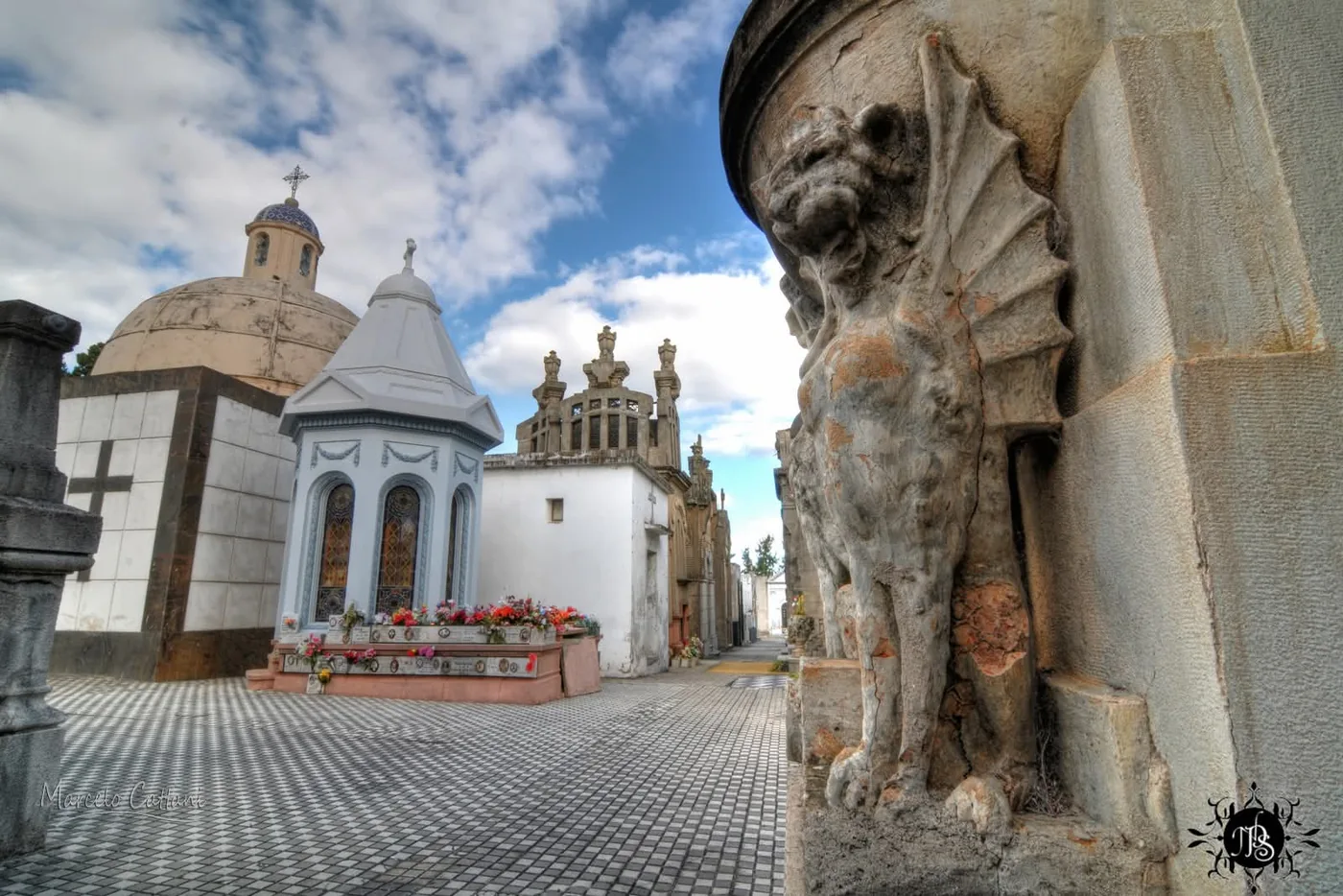
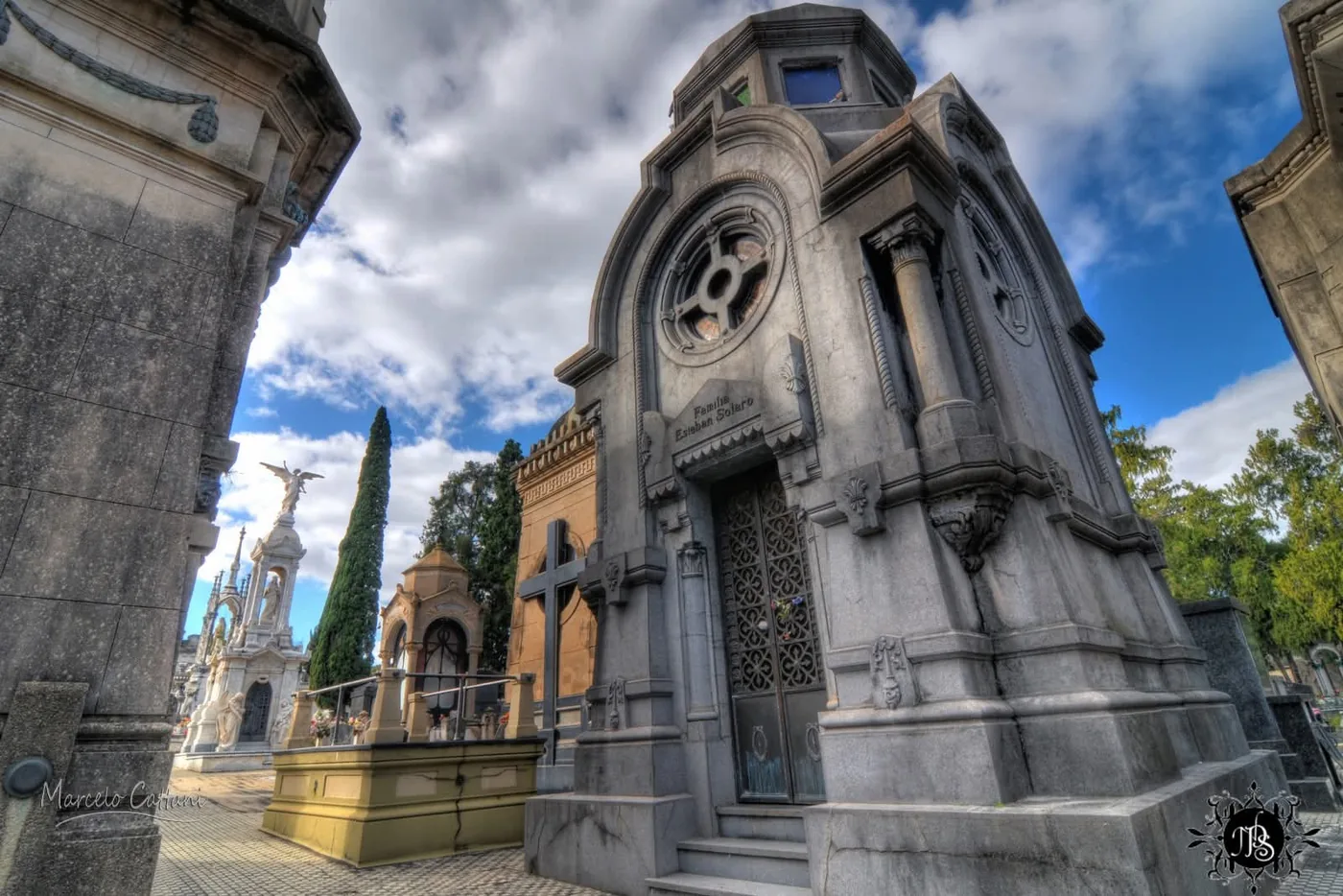
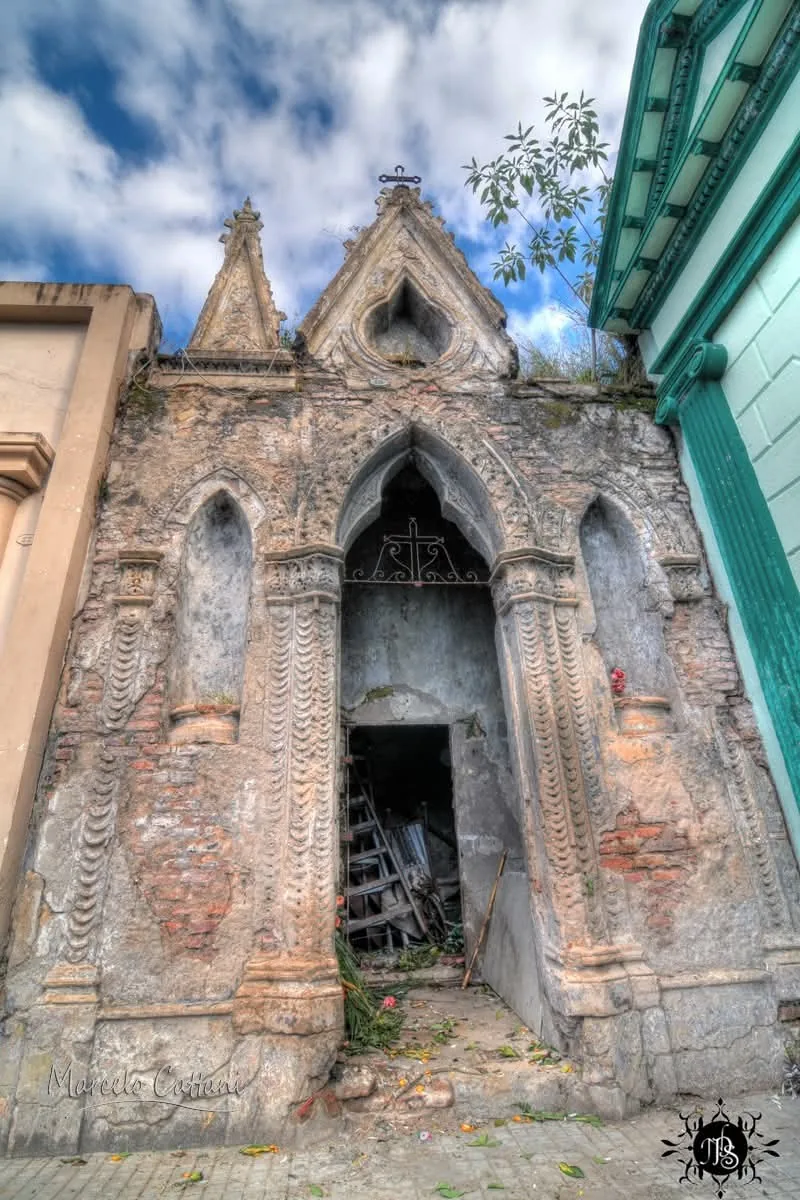
Photographs: Marcelo Cattani
What's Included
- Guided walk through the Central Cemetery with a local guide
- Invernizzi's 1853 plan: two axes meeting at the round central chapel, the diagonals of old casuarinas and the rows of panteones whose continuous façades form a street of the necropolis
- The immigrant societies: why Spaniards and Italians who had crossed the ocean together chose to be buried together. The panteones of Unión y Benevolencia and of the Spanish and Brazilian associations, and the Panteón Social of the Sociedad Italiana, a National Historic Monument
- How a marble panteón was bought: from a catalogue, like a flat, choosing the cross, the marble and a life-size angel with wings open or closed, feet on the ground or lifting off it. The pieces came from Italy by ship to Montevideo, up the Uruguay River on barges and from the port to the cemetery on ox carts
- Works by Giovanni del Vecchio, Giacomo Lena, José Luis Zorrilla de San Martín and Edmundo Prati: Del Vecchio's life-size Charity in Carrara marble, a mother with one child at her breast and another at her feet; the virtues as female figures on the Spanish association's panteón; the tall templete of the Ventura-Goncálvez family, crowned by an angel and flanked by two female figures at its door
- How to read the rest of the symbols: the open book, the rose, the wreath and the amphora on the obelisk of General Lucas Píriz beside the chapel. And styles side by side that are hard to find anywhere else, from neo-Gothic and an Art Nouveau door to Art Deco and early modern
When
Good to Know
The cemetery opens every day, 8am to 5pm at the time of writing and 9am to 3pm on public holidays; the entrance is on Acuña de Figueroa at the corner of Larrañaga, across the street from Eladio Dieste's old bus terminal. It is a working cemetery: funerals happen while you walk, so the guide keeps voices low and the group out of their way, and the photographs are of the architecture, never of mourners. Morning or late afternoon gives the best light on the marble. The walk is led in Spanish; if you need English, a note when you book lets me check what is possible. Meeting point confirmed with your booking. Free cancellation up to 24h before.
Related: Eladio Dieste's old bus terminal stands across the street from the cemetery →
I quote the price for your group in my confirmation. All I need is the date, how many you are and what the group is interested in.
No payment online · I confirm within 12 hours · The guide is paid on the day, in Uruguayan pesos, cash or bank transfer · Free cancellation up to 24h before
Request this walk