Words by Mathias Nicola · August 2026 · Revised October 2026
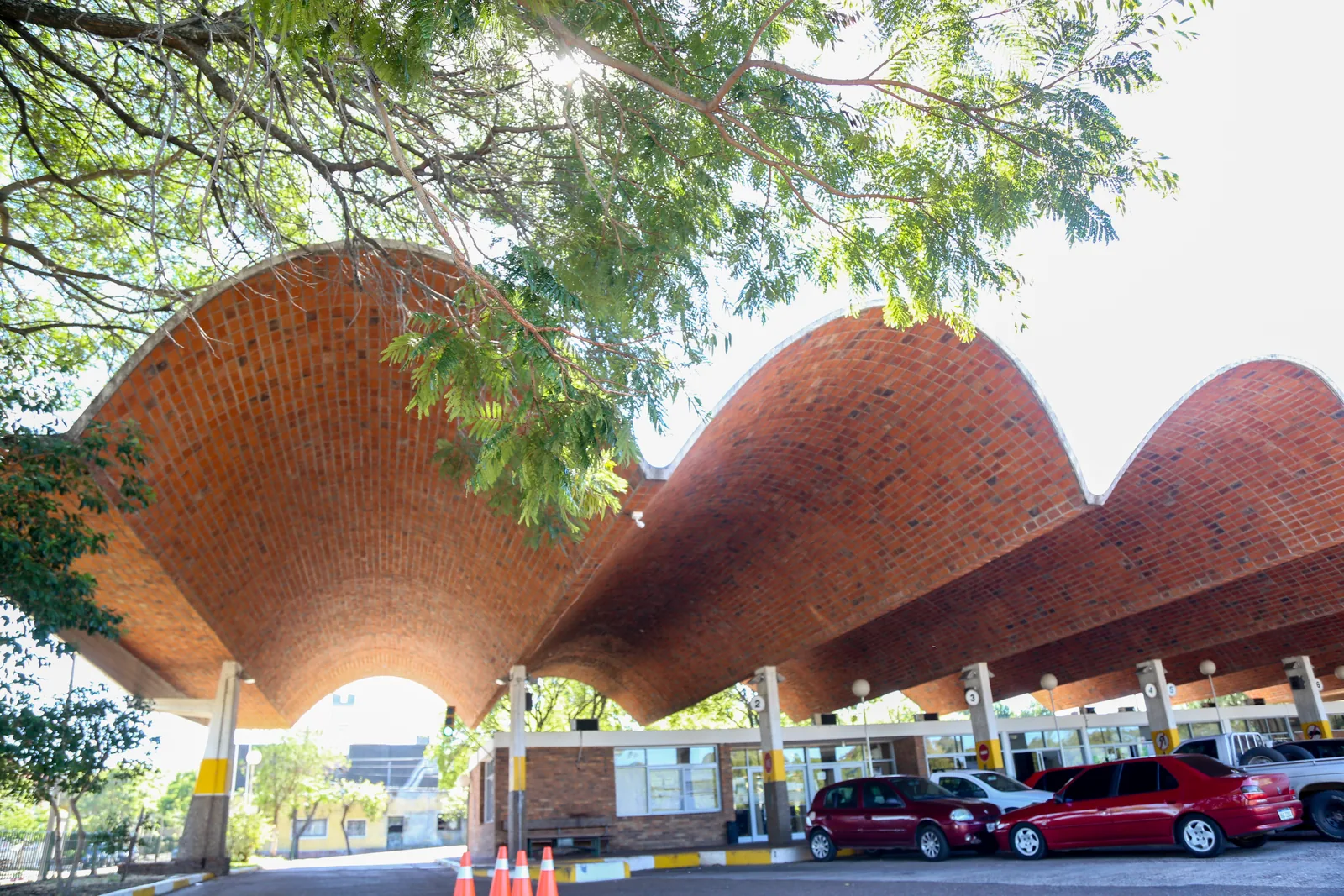
Eladio Dieste was born in Artigas, in Uruguay's far north, on 1 December 1917, and died in Montevideo on 19 July 2000. Trained as a civil engineer, he became, almost by accident of material rather than ambition, one of the most original architectural minds Latin America has produced. Dieste worked with the humblest of materials, fired clay brick, and with it he built roofs that curve, soar and seem to defy gravity. Critics call him a genius of structure. Uruguayans call him "el señor de los ladrillos", the lord of the bricks.
And nowhere is his relationship with a single Uruguayan city more visible than in Salto.
A City That Became His Laboratory
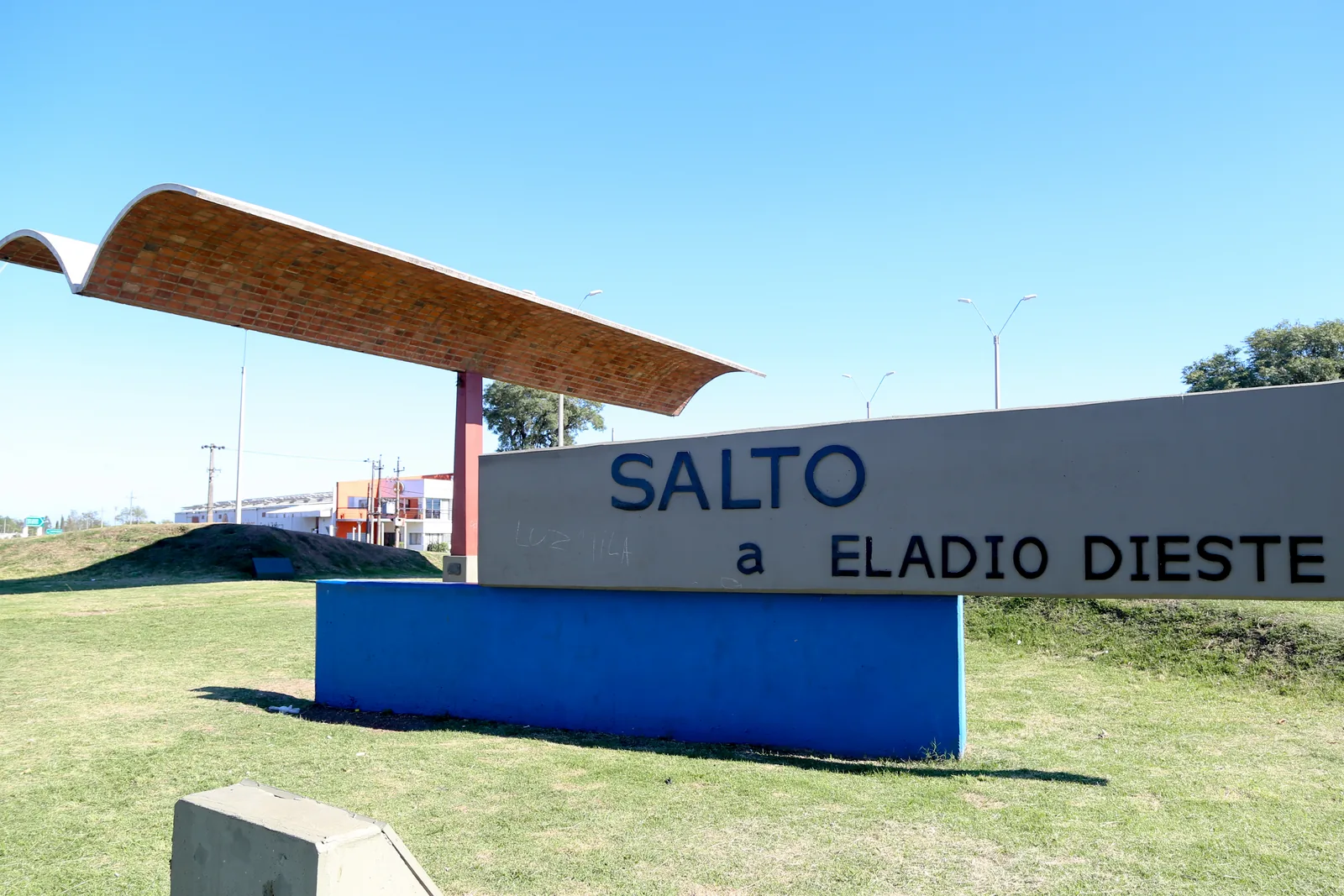
While Dieste's most famous work, the Church of Cristo Obrero in Atlántida, is far to the south, it was in Salto, in the citrus and hot-springs country of the north-west, that he built some of his most functional and daring structures. Salto gave Dieste the chance to prove that his signature technique, cerámica armada (reinforced ceramic), could serve everyday civic and industrial life, not just grand religious spaces.
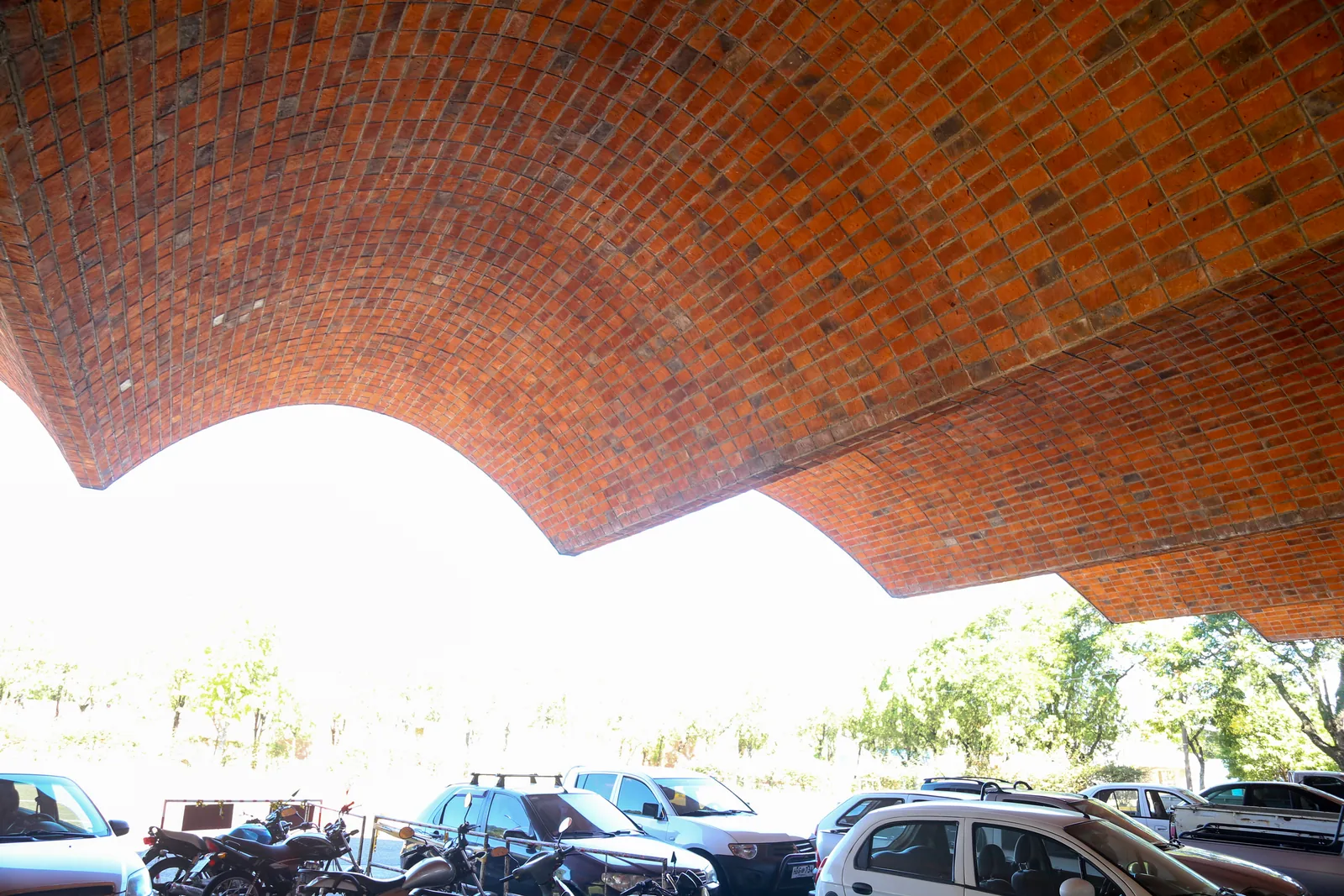
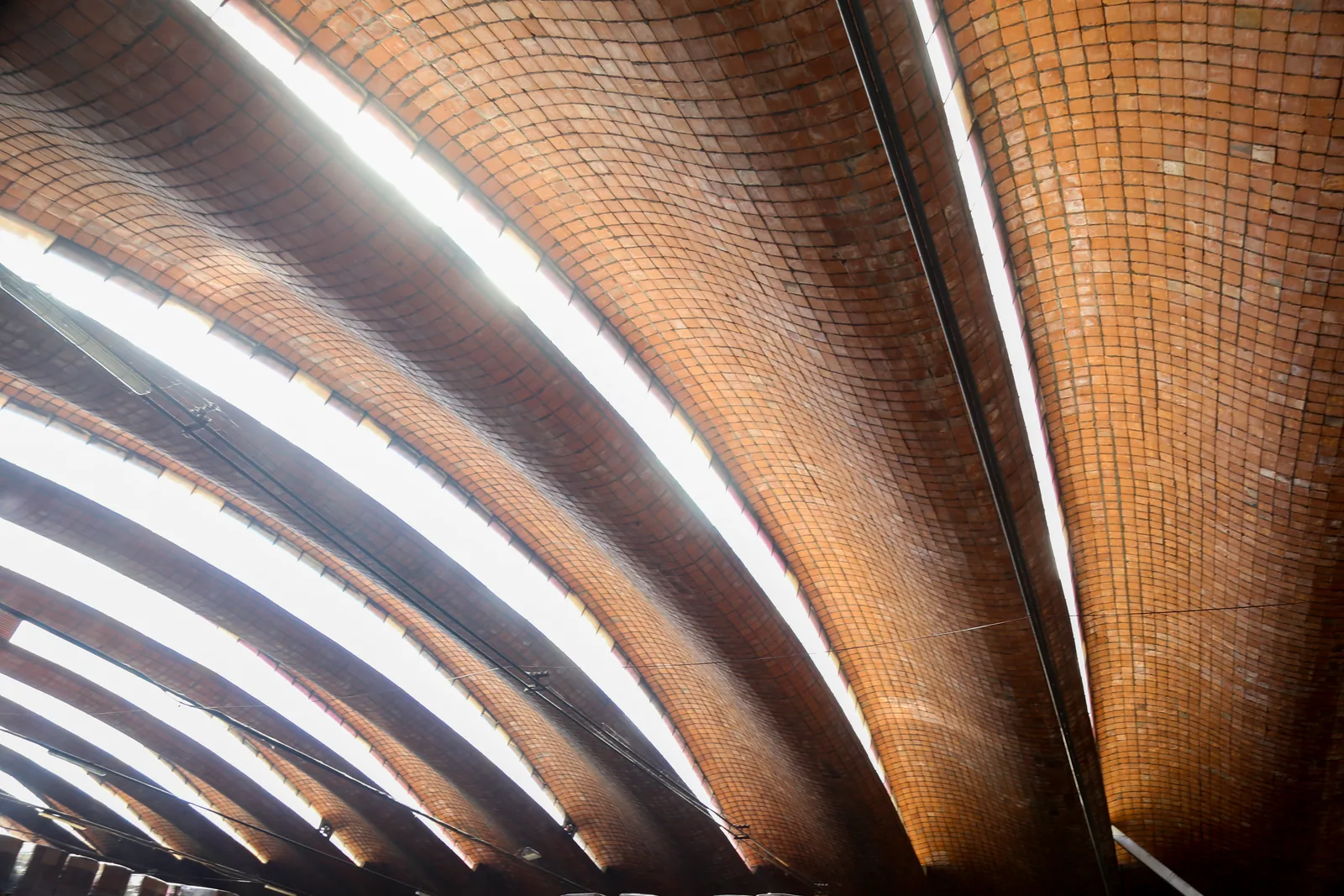
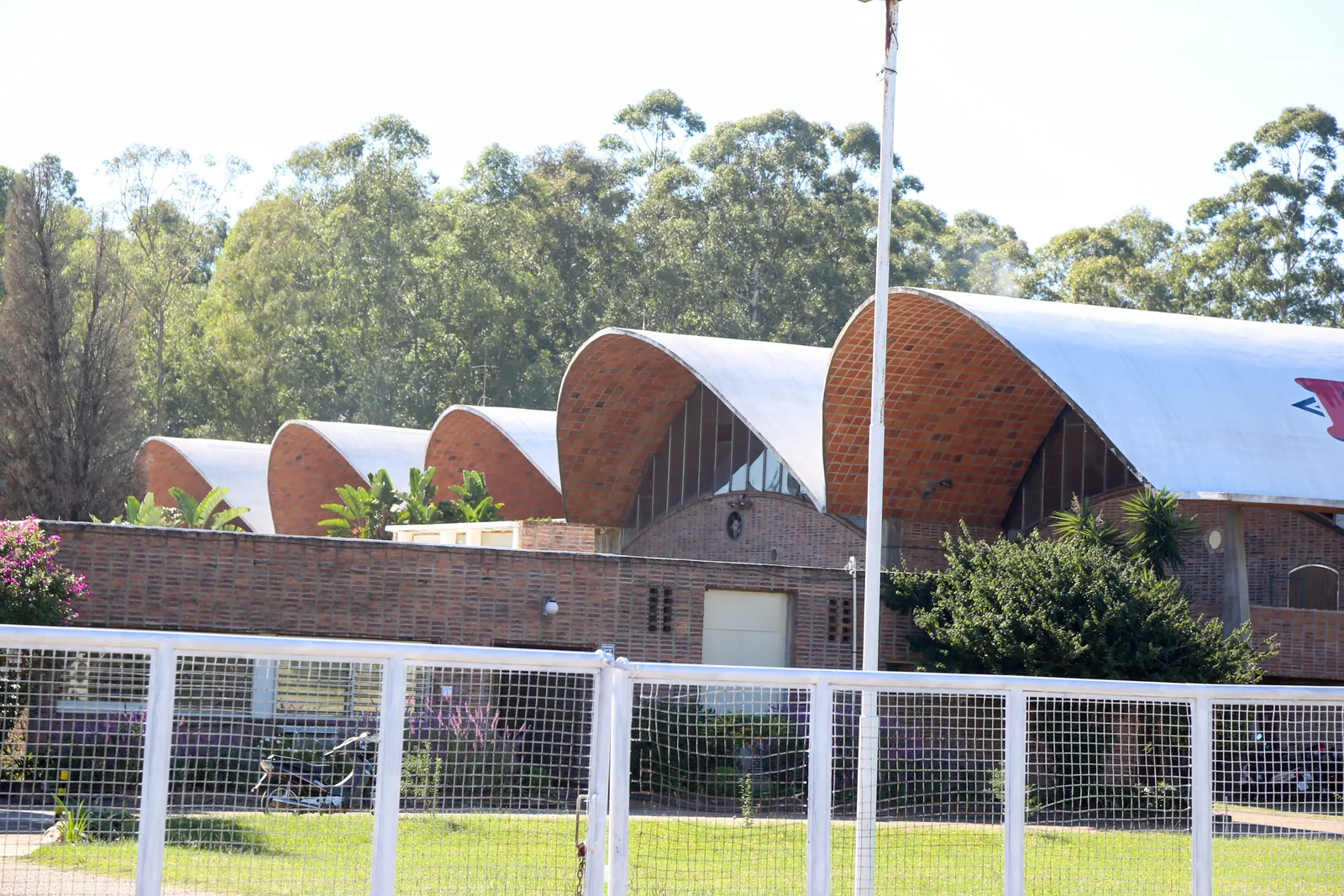
One of his best-known works in the city is the old municipal bus terminal (Terminal Municipal de Ómnibus), at Andrés Latorre and Larrañaga, opposite the cemetery (1973 to 1974), designed with the architect Néstor Minutti. Salto also keeps other examples of the same language: the Agencia Central terminal on Calle Cerrito, the Petrobras service station at Blandengues and 8 de Octubre, and the vaulted structure at Club Remeros Salto. Inside the old terminal today you stand beneath a rippling landscape of self-supporting brick vaults, thin, undulating shells of ceramic and steel that span wide distances without a single column breaking up the space. It looks impossibly light for something built entirely from fired clay. That lightness was never an accident. It was the whole point.
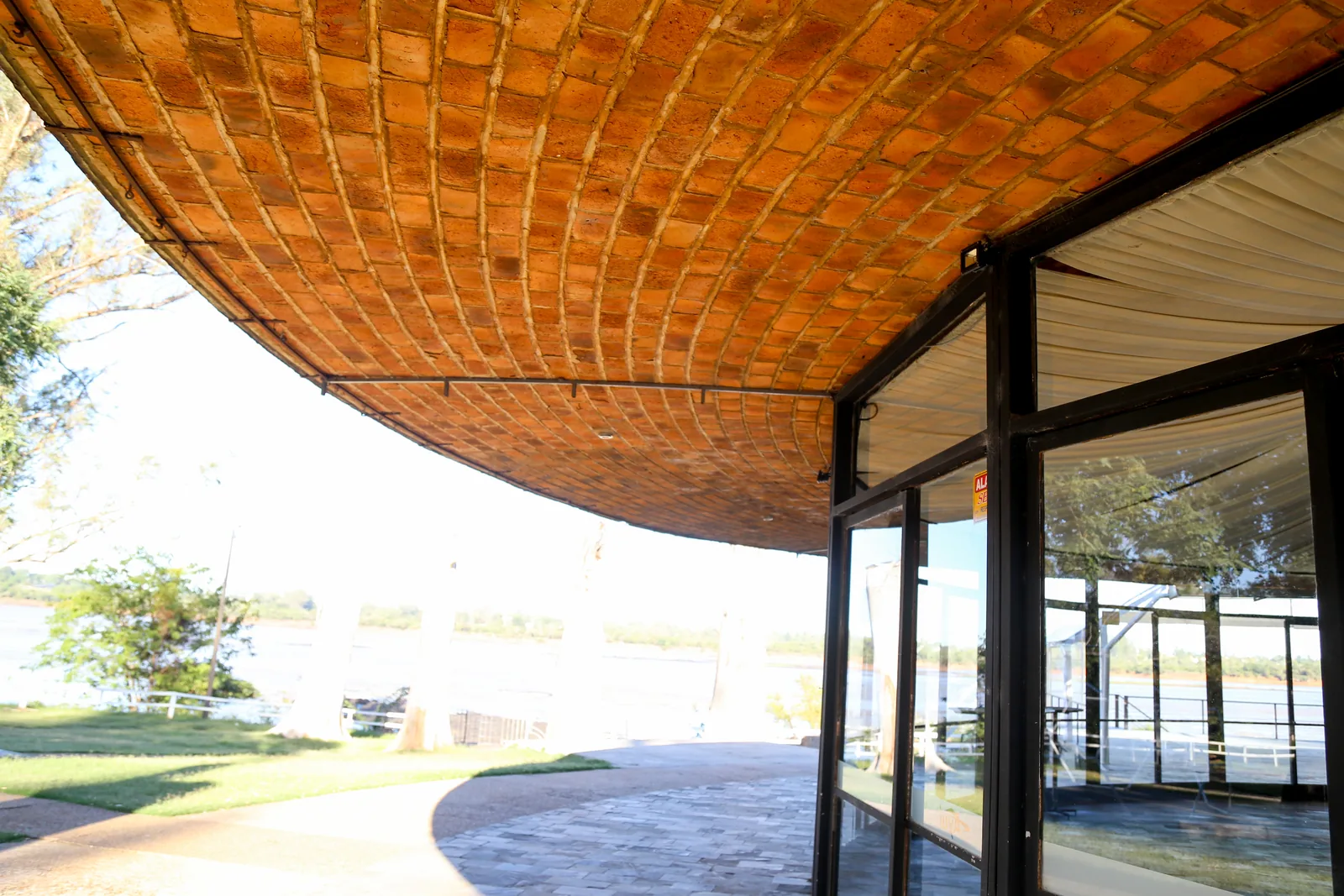
Just outside the city, on the Rambla Costanera Norte by the river, Dieste designed the Parador Ayuí, a small café and rest stop whose vaulted brick roof turns a simple riverside building into something quietly monumental. Further out, in Salto's farming country, he built the roof of the Caputto citrus packing plant (Empaquetadora de Cítricos Caputto), proof that his engineering applied as naturally to industrial agriculture as to civic architecture or sacred space. And at Termas del Daymán, the hot springs about 10 km south of the city, the same self-supporting brick vaults rise over the bathing complex: around 1,500 m² of covered area built by Dieste's firm for the Intendencia de Salto, sheltering bathers under the technique that made him famous. Salto's economy, built on citrus and the hot springs, found in Dieste a way to make even its warehouses beautiful.
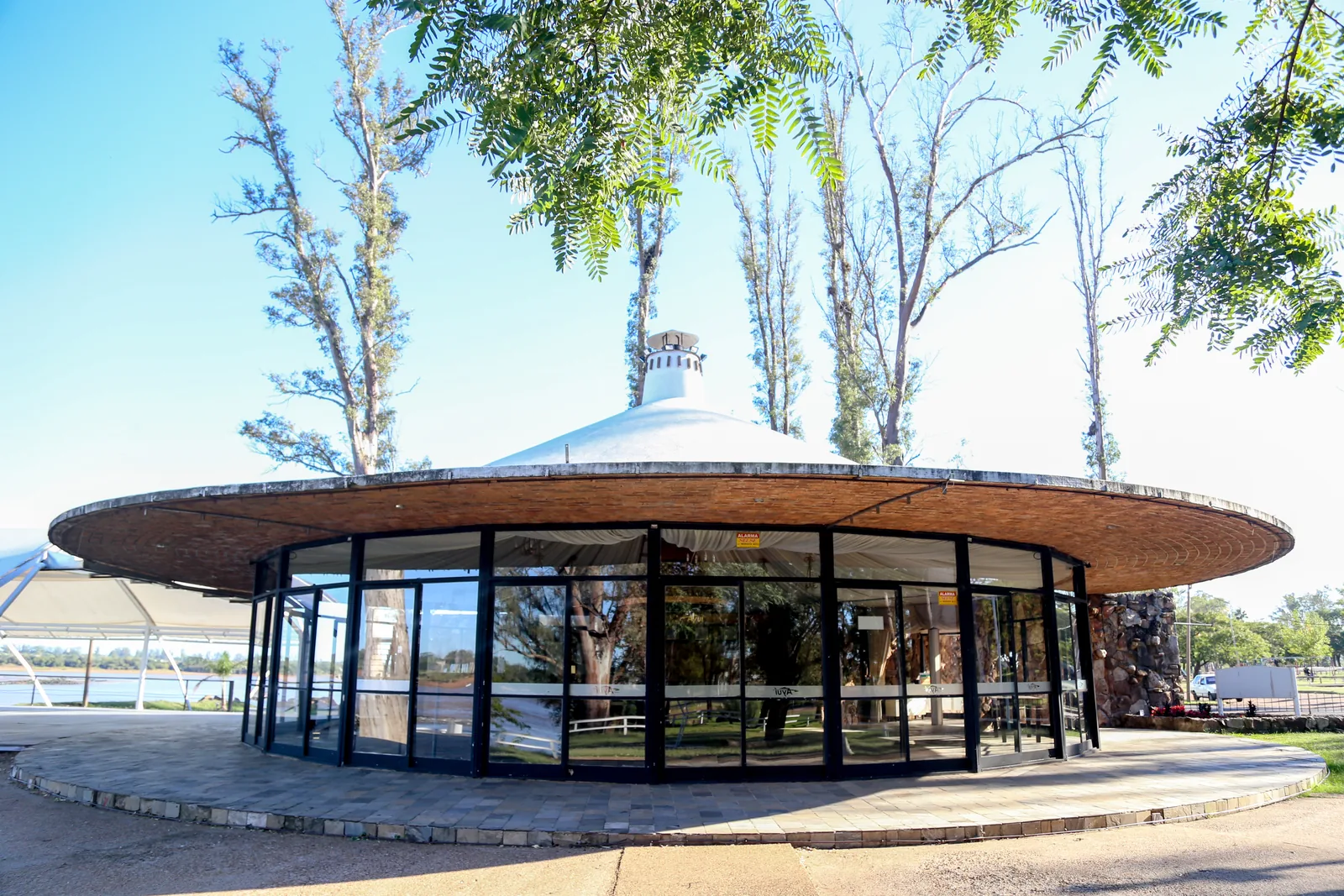
"Algunas de sus obras más importantes están en la ciudad de Salto" (some of his most important works are in the city of Salto), as local historians and architecture archives note: Salto holds one of the richest concentrations of Dieste's functional, non-religious work anywhere in Uruguay.
Economía Cósmica: The Philosophy Behind the Brick
Dieste was not only a builder. He was a thinker, and he left one of the most quietly radical philosophies in 20th-century architecture: the idea of economía cósmica, cosmic economy. It is easy to misread the phrase as saving money on materials. It is not that. For Dieste, cosmic economy meant something closer to humility: an insistence that building should not fight the natural order of forces (gravity, compression, tension, resonance) but understand it, cooperate with it, and let form come from that understanding rather than from ornament or ego.
In his own words, recorded in El País Cultural and repeated across academic studies of his work:
"Para que algo llegue realmente a la gente sencilla debe tener una levedad, una facilidad misteriosa, una simplicidad suma..."
("For something to truly reach ordinary people, it must have a lightness, a mysterious ease, a supreme simplicity...")
Eladio Dieste
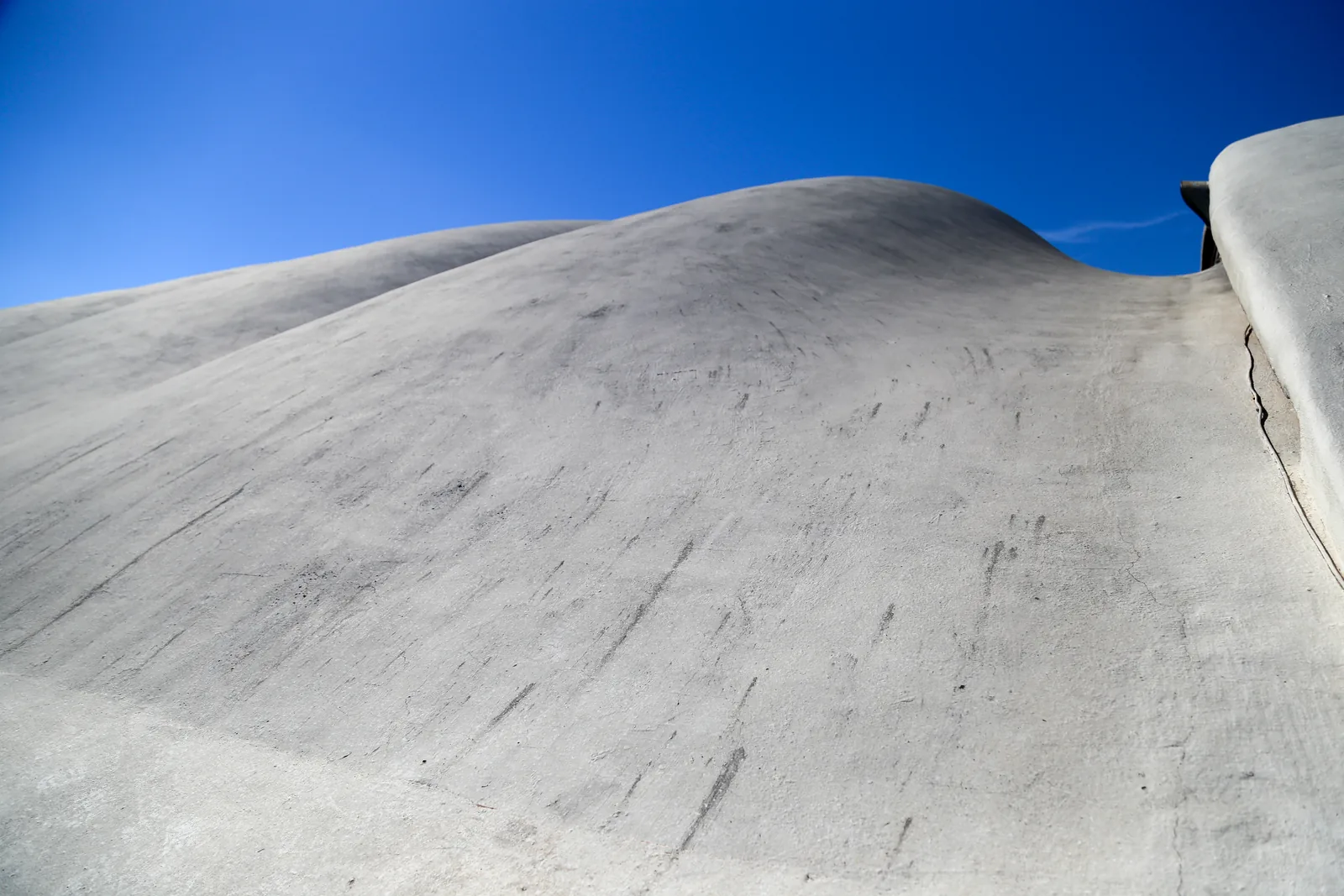
This is why his vaults curve the way they do: not for visual drama, but because a double-curved surface, correctly calculated, can be astonishingly thin and still immensely strong. A material as cheap and modest as fired brick, arranged with total respect for how forces travel through it, could span 40 m without heavy steel reinforcement or the brute mass of concrete. Dieste believed that respecting this natural order was not just efficient engineering but almost a moral obligation. Structures built in harmony with physical law, he argued, have an honesty and a beauty that structures built by force of material, poured concrete and excess steel, can never fully achieve.
It is a philosophy that fits Salto itself: a city shaped by its river, its hot springs and its citrus soil, a place that has always had to work with its natural resources rather than against them. In that sense, Dieste's buildings in Salto are not just structures placed in the landscape. In spirit, they are an extension of it.
His Work on a Map: Dieste in Salto
These are the main points where Eladio Dieste's architecture and his vaulted structures can be seen in and around Salto. The list includes the old bus terminal opposite the cemetery, the terminal on Calle Cerrito, a service station near Salto Shopping, Club Remeros Salto, La Gaviota, the Productos Fénix building, Parador Ayuí, the Caputto citrus packing facility and the vaulted roof at Termas del Daymán.
Map data © OpenStreetMap contributors. Pins are approximate locations for orientation purposes.
- Old Municipal Bus Terminal. At the corner of Andrés Latorre and Larrañaga, opposite Salto’s Central Cemetery. The city’s former bus terminal and one of Dieste’s best-known works in Salto (1973 to 1974, with the architect Néstor Minutti).
- Agencia Central Bus Terminal. On Calle Cerrito.
- Petrobras Service Station. At the corner of Blandengues and 8 de Octubre.
- Club Remeros Salto Vault. A vaulted structure at Club Remeros Salto, on the Uruguay River along the Rambla Costanera.
- La Gaviota. On Route 3, at the entrance to the city of Salto.
- Productos Fénix Building. On Route 3, a short distance from La Gaviota.
- Hotel Los Cedros. On Calle Uruguay, between Amorim and Joaquín Suárez.
- Water Tower. At the intersection of Manuel Oribe Avenue and Avenida de las Instrucciones del Año XIII in Salto, Uruguay.
- Parador Ayuí. Rambla Costanera Norte, along the Uruguay River. A small vaulted café/rest stop overlooking the river.
- Empaquetadora de Cítricos Caputto. Salto's citrus-growing outskirts. An industrial packing plant roofed with Dieste's characteristic ceramic vaulting.
- Termas del Daymán Roof. At the hot springs of Daymán, about 10 km south of Salto. Self-supporting brick vaults covering some 1,500 m² of the bathing facilities, built by Dieste's firm for the Intendencia de Salto.
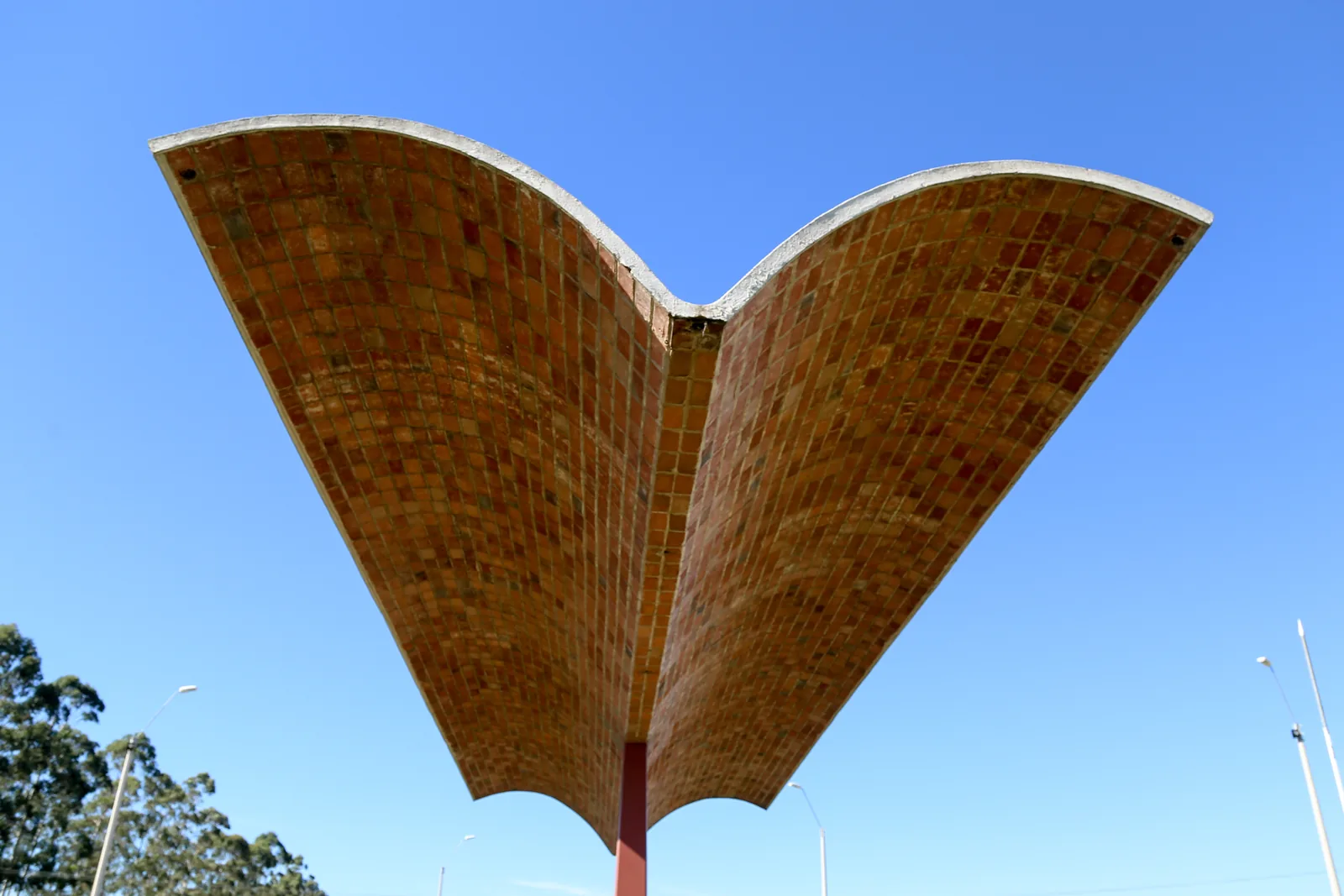
At Salto's old bus terminal opposite the cemetery, it is worth looking up. What seems like a simple roof is one of the great quiet arguments of 20th-century architecture: that beauty and economy were never opposites, only two names for the same natural order.
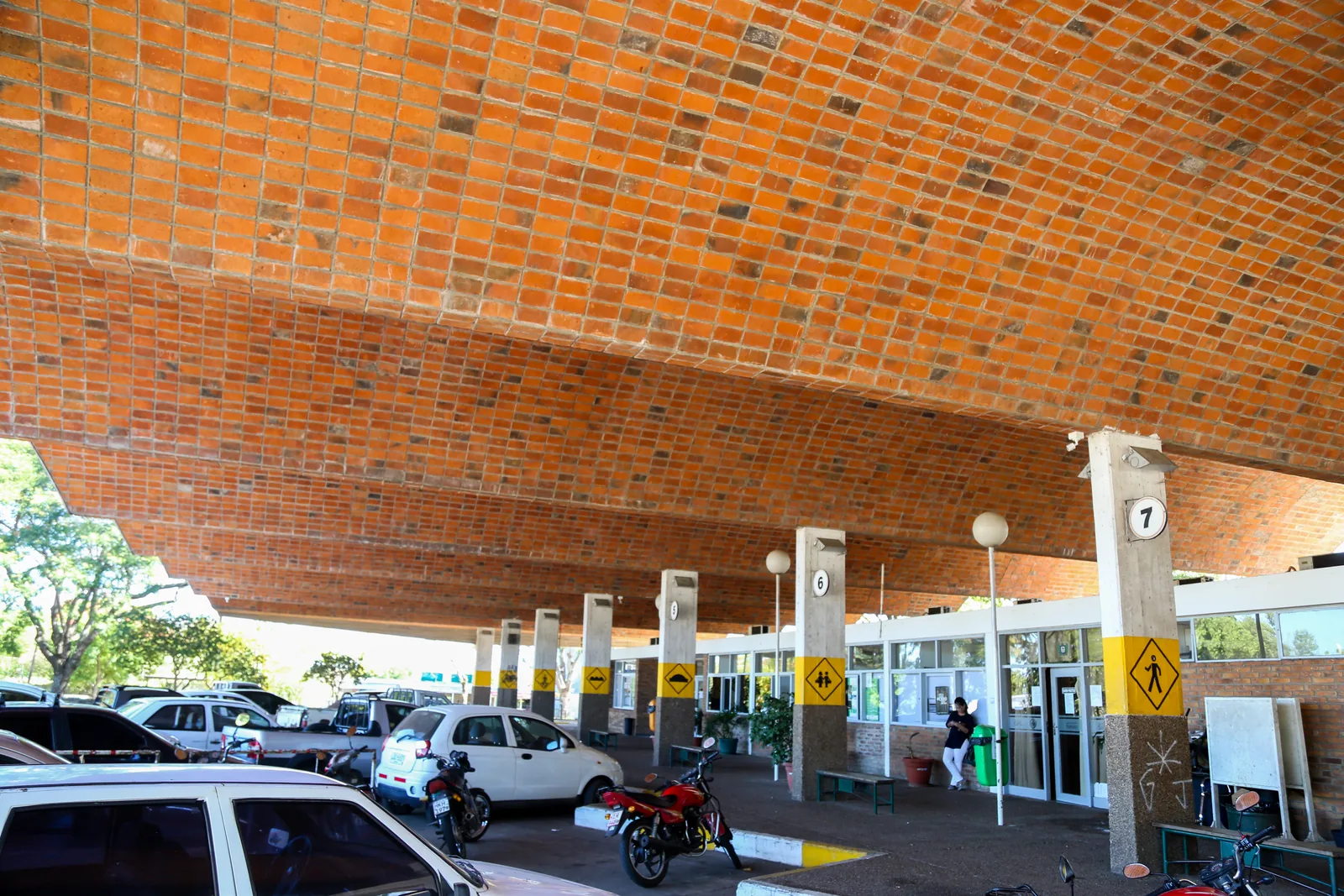
With a guide: The Legacy of Eladio Dieste is a guided walk to his brick vaults in Salto; a date request is all I need to confirm the details.
A guide walks these vaults with you, from the old terminal to the river, and I arrange the date.
The Legacy of Eladio Dieste →