
Words by Mathias Nicola · August 2026 · Revised October 2026
Esta nota, en español: La Aurora, la estancia de los ovnis
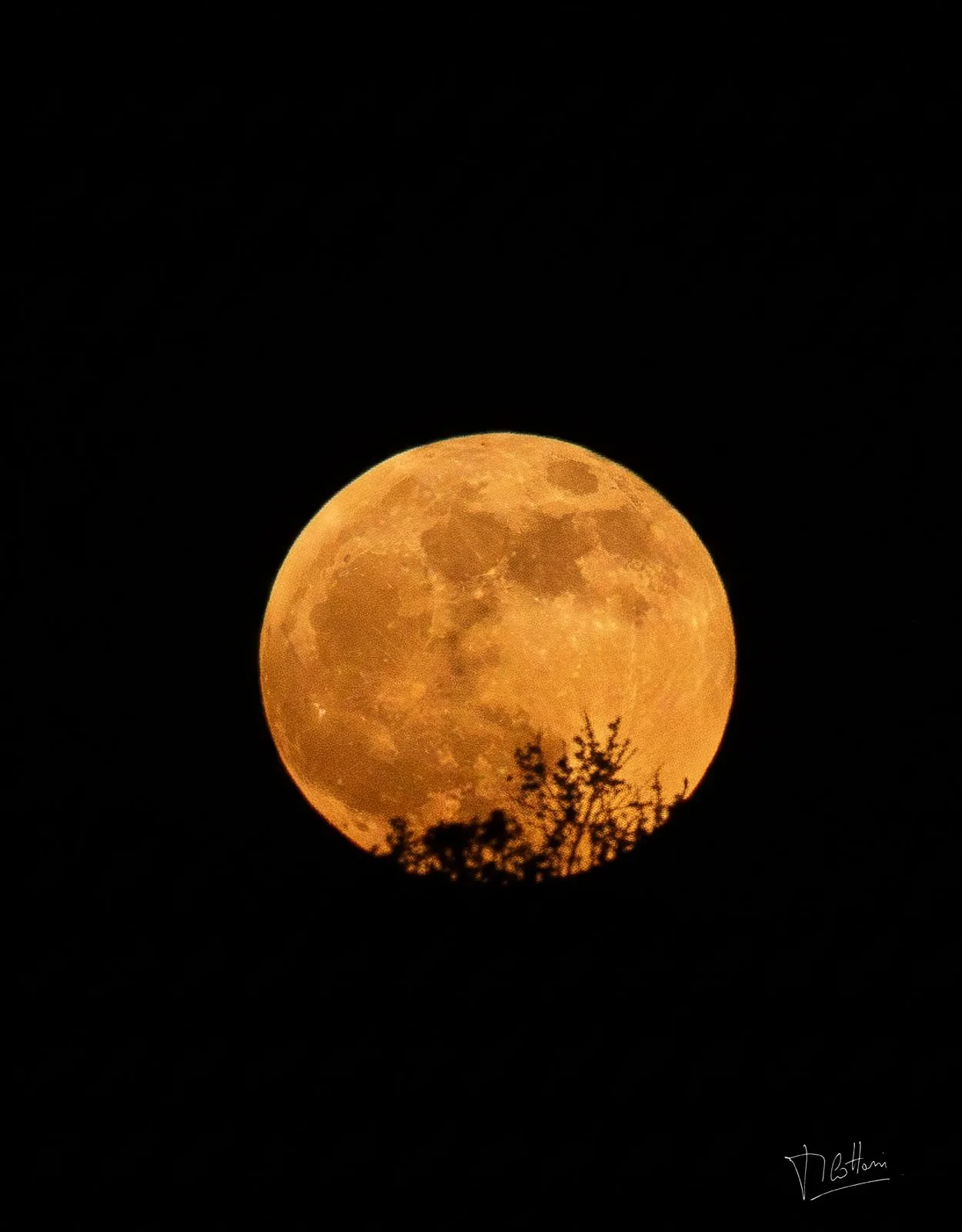
The Gruta del Padre Pío: yes. The shrine stands on the edge of the property, 13 km south of Salto on the Camino Tierras Coloradas, off Route 3 by the Daymán bridge. Open day and night, no charge. The lights are seen from here at night, and they have been seen by day too.
Neil Armstrong: Tonna always said he came and stayed at the estancia; Armstrong's office, asked in 2008, answered in writing that he had no memory of it and no record of the trip. Both versions are below.
Nearby: Termas de San Nicanor about 10 km away, Termas del Daymán a few kilometres north, and a two-day itinerary that joins them.
On the outskirts of Salto, along an unmarked road that runs through citrus groves and cattle fields, there is a rural property called Estancia La Aurora. For decades, people who live nearby have reported seeing things they cannot explain: lights that hover and accelerate beyond any known aircraft, objects that appear and vanish, sounds without a source, animals that behave as though responding to something invisible.
What makes La Aurora different from similar stories elsewhere is the consistency of the accounts. The founding events are precisely dated: the burning ombú tree of March 1976, and the luminous object over the corral in February 1977 that left animals dead and the city of Salto without electricity for hours. The witnesses, from the owner of the ranch (estancia) and the farm workers to visiting journalists, have repeated the same details for decades: lights that hurt the eyes, scorched circles in the pasture, objects seen by night and in broad daylight.
The Uruguayan government has officially investigated. The Air Force maintains a formal commission, CRIDOVNI, to investigate aerial phenomena, one of very few such official bodies in the world. Several of its most significant cases involve the Salto region and the area around La Aurora.
What happened, as the family tells it
The estancia had its name before the lights: the grandmother of the family said it would be a new dawn for Salto, and La Aurora is the dawn. The land is on the Paysandú side of the Daymán, at Tierras Coloradas, but Salto has always treated it as its own, because the city is close and Paysandú is far.
The first night was 3 March 1976, at 1.50am. Ángel María Tonna, the owner, woke to the hens in uproar and the dogs barking without pause, then silence, then an explosion in the middle of the field. Outside, the whole countryside was lit. Above it a huge light came down and went up again, and with two others it made a triangle of pale blue lights that moved like nothing he knew: no plane, no helicopter, no searchlight. The lowest one hung close to the ground for perhaps a minute, rose, joined a larger triangular light, and left at speed.
In the morning one of the two ombú trees by the house was gone. Where it had stood there was a hole down to the roots and no wood anywhere, and in the hole one of his dogs, dead and dry, as if mummified. In the days that followed hares and a toad turned up the same way, dead without rotting. There are photographs of the yard with two ombúes and with one.
The second time was the early morning of 18 February 1977, at about 4. Tonna and his foreman, Juan Manuel Fernández, were bringing some 80 cows into the shed for milking when the generator lights went out and a bright orange disc appeared behind the shed, hovering some 18 metres up. It broke branches off a tree, stopped over the cattle dip, then turned towards Tonna and stopped about 18 metres from him. He felt electric shocks and an intense heat, raised an arm over his face and could not move. His dog, Topo, went for it, then sat howling a few metres away. The disc turned red and left towards the woods; the generator started again but gave no power, its wires burnt out. The next morning the underside of Tonna's right arm hurt; a doctor friend found it badly reddened, put it down to some kind of radiation, and in time it healed. Topo stopped eating and drinking and was found dead on the third morning, on the same mound; the vet who opened him wrote that the animal had been exposed to a heat it could not have met naturally. That is the account APRO, the American research group, published in August 1977, months after the event. Later tellings add a dead bull, scorched sheep and cut fences, and the city of Salto without electricity for hours; in 2013 Voces Anónimas added a cross burnt into the ground and a piece of basalt from the spot, burnt as if by great heat, that a researcher who visited him kept for years.
This was under the dictatorship, and a local commander sent a group of soldiers to camp at La Aurora and watch. The family opened the gates. After three or four days the soldiers were gone, all at once, and none of them ever said what they had seen; no military record of the mission has been found.
Ángel María Tonna died in the mid-2000s. All of this was told in 2013 to Voces Anónimas, the Uruguayan television series, in the episode that opened its fourth season, by his family (his widow and their three children, Ángel Humberto, Tulio and Elena Margarita, who stayed on at the estancia) and by the researchers who knew him. The programme also collected what came later: a journalist whose freshly charged camera batteries died on arrival, visitors who swear by the place, pilgrims who go to the gruta for their health. I pass it on as testimony, which is what it is.
Did Neil Armstrong visit La Aurora?
The story has run for decades: that the first man on the Moon came to the estancia, in one version twice and as a correspondent for Newsweek, in another on NASA's behalf. Voces Anónimas told it again in 2013: that Armstrong came in 1977, stayed several days as Tonna's guest, that a member of CRIDOVNI drove him there himself, and that he left Tonna photographs of lights like the ones he had seen, which the family kept as a treasure. In April 2008 Ángel De Vitta, a Uruguayan journalist and astronomy teacher who edits the magazine Dimensión desconocida, wrote to Armstrong to ask. The reply came on 15 May 2008 from his office, signed by his assistant, Vivian White: Mr Armstrong had no memory of the people named or of visiting an estancia called La Aurora, and his travel records showed no such trip. Newsweek's editor added that Armstrong had never been a correspondent or special envoy for the magazine. De Vitta called the letter the end of a rumour that had grown into an urban legend. That is the documented answer, and it is not the end of the story at La Aurora: Tonna said until he died that Armstrong had been his guest, the family kept the photographs, and a letter from an office does not prove where a man was in 1977. What it does prove is that, if he came, he came without leaving a record.
He knew the region, which is why the story never sounded absurd here. In October 1966 Armstrong and the astronaut Richard Gordon spent three weeks touring Latin America for NASA, explaining the space race, and Uruguay and Argentina were among the stops: ten years before the burning ombú, and the only visit to Uruguay that the records show.
Is La Aurora a portal? The Uritorco comparison
Ask in Argentina about La Aurora and sooner or later someone names Cerro Uritorco, the hill above Capilla del Monte in Córdoba where people go to watch for lights, and Erks, the city the legend puts beneath it. El Observador wrote it plainly in 2023: like Roswell in the United States or the Uritorco in Córdoba, La Aurora is preceded by its legends. The comparison is older than that. In 2011 the Buenos Aires daily Ámbito listed La Aurora, the Daymán hot springs and the Padre Pío grotto next to Capilla del Monte as stops on what it called mystery tourism.
What believers say is this. The ground is rich in quartz and concentrates energy; the place is an axis of the world, an opening between dimensions, a portal to other realities that exist alongside ours. That is how Diego Moraes, a Salto writer, summed up the popular theories in his Bestiario del Salto Oriental, along with a ranking that circulates among the faithful: the strongest points on Earth, level seven, are Erks (which Moraes places in Russia and the Argentine legend under the Uritorco), Tibet, the Bermuda Triangle and the old Maya capital; La Aurora, like Isidris in Mendoza, is only level two. A Concordia newspaper told in 2024 how Guido Bassler, president of the Argentine Radiesthesia Association, measured the energy of the estancia with his instruments and said the only place that had read as high was the Uritorco. Gustavo Fernández, an Argentine researcher who came with a group, wrote that the lines of telluric energy bent to meet at the grotto itself, and allowed that volcanic rock or the quartz might explain it. And in March 2013 two reporters from El Pueblo waited at the grotto past midnight and met four people from Salto who go often, nearly always at night: they smell roses, they said, and feel peace, and 21 March is the day a portal opens, one of the few in Latin America.
Martín Gamboa, who teaches at the University of the Republic in Salto, studied all this for years and published it in 2021 in the International Journal of Tourism Anthropology as a modern secular pilgrimage: tourists, ufologists, new age groups and religious pilgrims from several countries, on the same dirt road for different reasons. Eduardo Rodríguez, who has followed the estancia for decades, told Montevideo Portal in 2026 that people used to come from Buenos Aires, and ufologists, and the press, and that people still turn up saying they have seen lights. None of it proves anything. I pass it on as what it is: the reason people come.
Where La Aurora is, and what you can see
The estancia sits on the Daymán, the river that divides the department of Salto from Paysandú, 13 km south of the city, with the house on the Paysandú bank. It is the working ranch of the Tonna family, who reported the first events in February 1976 and who, after years of visitors, stopped receiving visitors in the early 1990s, as the Montevideo Portal reported in 2026; in 2013 the television still spoke of land open to the public, and what stays open today is the shrine and the ground around it. They never charged for the story and never tried to make money from it.
What you can visit is the Gruta del Padre Pío, the shrine the family built in 1987 on the edge of the property, on land they went into debt to buy. Its statue is said to be the first raised to Padre Pío in the Americas, and since 2007 the diocese has held celebrations there again. You reach it by the Camino Tierras Coloradas, the dirt road that leaves Route 3 by the Daymán bridge; it is open day and night and there is nothing to pay. The lights are not only the estancia's past: people who go to the grotto see them at night, and there have been sightings by day too, lights and objects in the sky. Those who go ask for quiet.
Tonna built it to keep a promise to a Capuchin friar who had been his spiritual adviser; by his own account, written years later, a vision on 8 January 1987 showed him the exact spot. Two Argentine sculptors, Guillermo Beckes and María de las Mercedes Schoenemann, moved into the estancia and modelled in the milking shed, with clay from the banks of the Daymán, the figure of a young Padre Pío, about 2.5 metres tall. It was inaugurated on 25 May 1987, the day the friar would have turned 100, with the bishop of Salto, Carlos Nicolini, present. Nicolini died the following year and the bishops who came after discouraged visits; only in 2007 did the diocese say Mass at the grotto again, and it now does so twice a year, on 25 May and 23 September. The family has turned down offers for the land and the statue, and there is still nothing to pay.
Five questions
Can you visit Estancia La Aurora?
No. The estancia is private and has been closed to the public since the early 1990s. The Gruta del Padre Pío, on the edge of the property, is open to everyone, day and night, with nothing to pay.
How do I get to the Padre Pío grotto, and when is it open?
From Salto take Route 3 south for about 13 km to the Daymán bridge; the Camino Tierras Coloradas, a dirt road, leaves the highway there. A taxi from the city or your own car will do, and I can arrange a transfer. The shrine has no opening hours and no ticket.
Did Neil Armstrong really visit La Aurora?
Nobody can prove it either way. Tonna always said he did, and the family kept the photographs he is said to have left. In May 2008 Armstrong's office answered in writing that he had no memory of such a visit and that his travel records showed none. His only documented trip to Uruguay was in October 1966, with the astronaut Richard Gordon, on a three-week NASA tour of Latin America that also took in Argentina.
Is La Aurora a portal, like Cerro Uritorco?
That is what believers say, and have said for decades: quartz in the ground, an axis of the world, a portal to other realities. The Uruguayan press compares it with Roswell and the Uritorco, an Argentine dowser said he had measured there an energy he had only found on the Córdoba hill, and some people go to the grotto on 21 March because, they say, a portal opens that day. None of it is proven. What there is are people who come, by night and by day, to watch the sky.
Is there a hotel near La Aurora?
Termas de San Nicanor, about 10 km away, is an estancia with hot-spring pools, a hotel and camping for its own guests; the hotels of Termas del Daymán are a few kilometres north. The two-day itinerary on this site puts the night at San Nicanor.
Sources
- Montevideo Portal, 22-may-2008 · El hombre que nunca estuvo (Ángel De Vitta, Dimensión desconocida; carta de la oficina de Neil Armstrong, 15-may-2008)
- Montevideo Portal, 10-jul-2026 · Pedro Dutour, El encanto, el misterio y el magnetismo de La Aurora que aún convocan visitantes
- Intendencia de Salto · Agenda Salto: Gruta del Padre Pío, Camino Tierras Coloradas, 13 km, abierta las 24 horas, sin costo (octubre de 2026)
- Voces Anónimas IV, capítulo estreno "La Aurora" (Guillermo Lockhart, 2013; en YouTube): testimonios de la familia Tonna, de investigadores y del periodista Daniel Bianchi; transcripción aportada por Mathias el 25-oct-2026
- Rensselaer Polytechnic Institute Archives · Latin American Tour, October 1966 (gira de tres semanas de Armstrong y Gordon para la NASA; carpetas Paraguay-Uruguay-Argentina y Uruguay)
- Montevideo Portal · Leyendas urbanas: los ovnis de La Aurora (Diego Moraes, adelanto de Bestiario del Salto Oriental: cuarzos, eje del mundo, portal, la escala de niveles con Erks)
- El Observador, 19-feb-2023 · Emanuel Bremermann, Ovnis en Uruguay: entre las luces sin explicación y un país con tradición de turismo ufológico (Roswell, Uritorco; Martín Gamboa)
- Diario El Sol (Concordia), 2-jul-2024 · En el Día del OVNI, lo que sabemos de la Estancia La Aurora (crónica de Cambio, Salto; Guido Bassler, Asociación Argentina de Radiestesia, y el Uritorco)
- Ámbito (Buenos Aires), 25-feb-2011 · La curiosa magia de los tours energéticos (La Aurora, Termas del Daymán y la gruta junto a Capilla del Monte y el Uritorco)
- Gustavo Fernández, Al Filo de la Realidad, 12-abr-2015 · Estancia La Aurora: 25 años después, ovnis y el milagro del Padre Pío (líneas telúricas en la gruta, cuarzos, Uritorco)
- El Pueblo (Salto), 31-mar-2013 · El mito de La Aurora (una noche en la gruta con los que van seguido; el portal del 21 de marzo)
- Visión Ovni (Argentina), 2007 · Luis Reinoso en Estancia La Aurora (da 2005 como año de la muerte de Tonna; El Espectador, 20 de setiembre de 2007, dice “hace tres años”; la estancia quedó en manos de su viuda y sus tres hijos, Ángel Humberto, Tulio y Elena Margarita)
- APRO Bulletin, agosto de 1977 · el caso Tonna del 18 de febrero de 1977 (4:10 de la madrugada, el ordeñe, el capataz Juan Manuel Fernández, el perro Topo, el brazo; reproducido en Think About It Docs)
- Padre Pío, Huellas y Caminos (padrepio.uy) · Relato de Ángel María Tonna Zanotta: la promesa, la visión del 8 de enero de 1987, los escultores, la inauguración del 25 de mayo de 1987 con monseñor Nicolini (testimonio en primera persona, sin fecha)
- Montevideo Portal, 26-ago-2026 · “Hay muchas historias”: la Gruta del Padre Pío y una fe que sigue viva en La Aurora (Pedro Dutour; los escultores en el tambo, la cabeza, Nicolini, los obispos que desalentaron las visitas, 2007, las misas del 25 de mayo y el 23 de setiembre, las ofertas rechazadas)
- Conferencia Episcopal del Uruguay · Obispo de Salto presidió misa en la Gruta del Padre Pío (dos misas por año, 25 de mayo y 23 de setiembre)
- Martín Gamboa, International Journal of Tourism Anthropology 8(2), 2021 · Spiritual pilgrimages and UFO tourism in Uruguay: the case of La Aurora's cattle ranch
- El Diario de Carlos Paz, 20-ago-2025 · La leyenda de Erks, la ciudad que se esconde dentro del Uritorco
Nobody has an explanation. The witnesses are still there. The lights, according to those who know the estancia, still appear. Salto does not advertise this story. But it does not deny it either.