
Words by Mathias Nicola · August 2026 · Revised October 2026
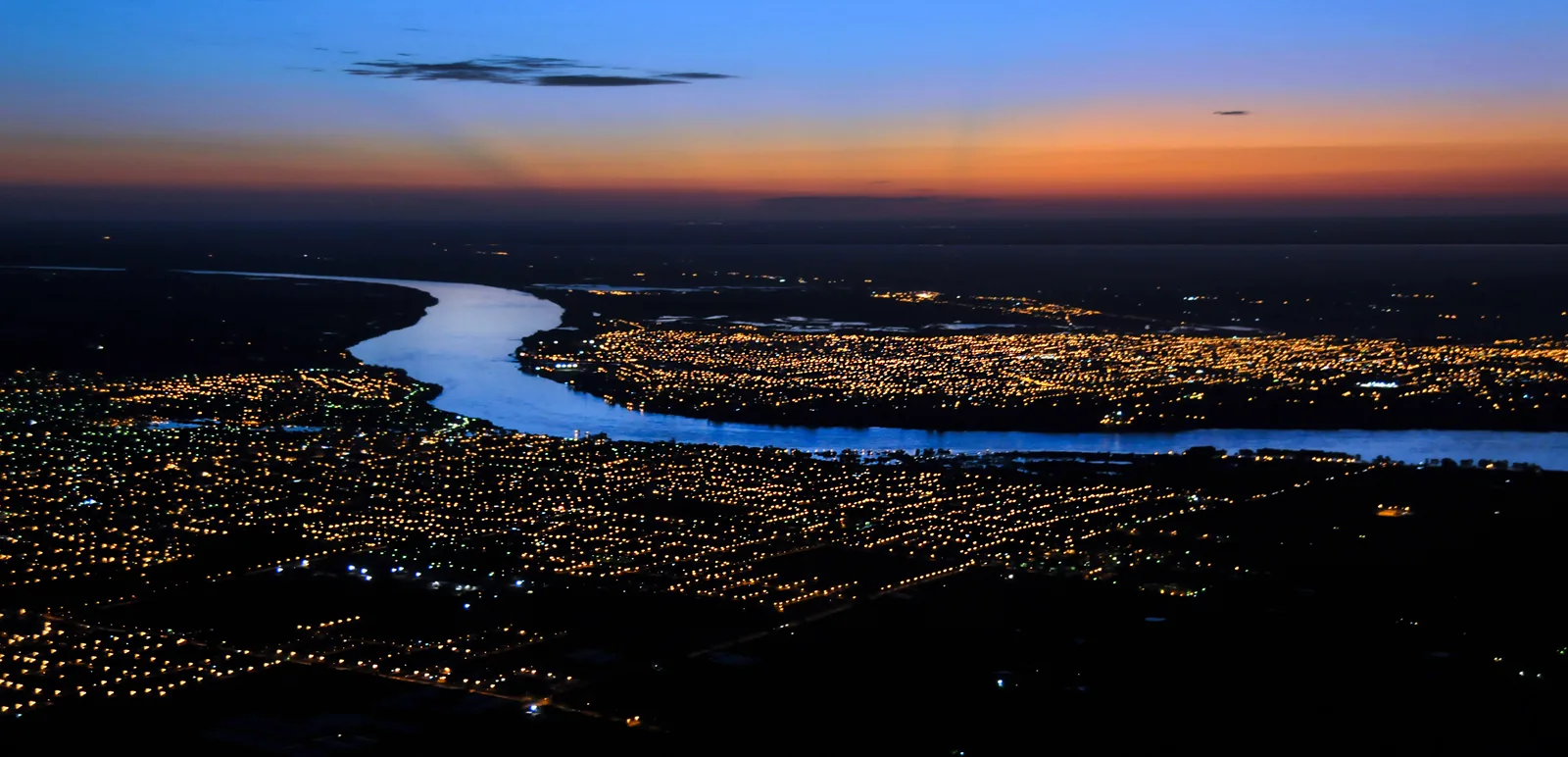
South America has a fame problem. The fame all goes to the same five places: Machu Picchu, Iguazú, Patagonia, Rio and the Galápagos. They are magnificent, and they are on every itinerary. Meanwhile, a whole continent of remarkable places sits quietly off the main circuit. These places still give you what made travel worth doing in the first place: the feeling of arriving somewhere before everyone else.
Here are five destinations that deserve far more attention than they get. There are no gimmicks here, and no "secret beaches" an hour from a resort strip. These are five places that genuinely get few visitors, and each one has something the famous circuit cannot match.
1. Salto, Uruguay — hot springs without the crowds
Uruguay itself is overlooked. Most itineraries give it Montevideo, Colonia del Sacramento and Punta del Este at best, and the north-west corner rarely appears on any of them. Salto sits on the Uruguay River, above the Guaraní Aquifer, and naturally hot mineral water rises from it. That water feeds the hot springs resorts at Daymán, Arapey and Salto Grande, where you can soak outdoors all year round for a fraction of what a European spa town charges.
Around the pools there is plenty to do: fishing in Uruguay at its best, dorado on a river full of life, capybaras (carpinchos) and rheas (ñandúes) in the countryside, Tannat wine, and barbecues (asados) at the ranches (estancias). Luis Suárez, Edinson Cavani and the writer Horacio Quiroga were all born here. Salto is also a natural stop between Patagonia and Iguazú Falls, so leaving it out is not just a shame. It is bad route planning. (Yes, this is my home town. I would put it first anyway.)
2. Iberá Wetlands, Argentina — the continent's quiet Pantanal
Across the river in Argentina, north of Salto, the Esteros del Iberá in Corrientes province form one of the largest freshwater wetlands on Earth: 13,000 km² of lagoons, floating islands and golden marsh grass. Everyone flies over it on the way to Iguazú. Almost nobody stops. Those who do find caimans on every bank, capybaras in herds, marsh deer and more than 350 bird species. Iberá is also one of the world's great rewilding stories: jaguars, giant anteaters and giant otters have all been brought back here. The base is the village of Colonia Carlos Pellegrini, reached by a long dirt causeway. It feels the way the Pantanal must have felt 40 years ago.
3. Chachapoyas, Peru — the other lost civilisation
While the queues form at Machu Picchu, northern Peru keeps a whole pre-Inca civilisation almost to itself. The Chachapoya, the "cloud forest people", left behind Kuélap, a mountaintop fortress with walls up to 19 m high that is centuries older than Machu Picchu. They also left the cliff-face sarcophagi at Karajía and hundreds of sites that are still barely excavated. Nearby, the Gocta Falls drop 771 m in two tiers through the cloud forest. It is one of the tallest waterfalls in the world, and the outside world only heard of it in 2006. The town of Chachapoyas itself is whitewashed and colonial, and tourism there still feels like a novelty rather than an industry.
4. Chiloé Island, Chile — myth, mist and wooden churches
Travellers racing down Chile towards Torres del Paine pass the turn-off to Chiloé without a glance. Their loss. This rainy island is culturally unlike anywhere else on the continent. Its 16 wooden churches, built without nails by shipwrights in the Jesuit era and now listed by UNESCO, stand over fishing villages of palafitos, brightly painted houses on stilts above the tide. The island has its own mythology (ghost ships, forest imps and the witches of Quicaví), its own food (curanto, a feast of shellfish and smoked pork steamed in a pit in the ground) and its own slow pace. Penguin colonies and misty national parks complete the picture. Chiloé is the quiet front door to Patagonia, and almost nobody gives it the three days it deserves.
5. Kaieteur Falls, Guyana — the greatest waterfall you have never heard of
Deep in Guyana's rainforest, the Potaro River pours over a sandstone ledge and falls 226 m in a single drop, about four times the height of Niagara, into a gorge of untouched jungle. Kaieteur is one of the most powerful single-drop waterfalls on Earth, and on many days its visitors can be counted on one hand. There are no railings, no queues and no vendors, just golden rocket frogs living in giant bromeliads and swifts diving behind the curtain of water at dusk. Guyana as a whole is English-speaking, covered in forest and extraordinarily rich in wildlife. It may be South America's last real frontier for travellers.
The pattern, and the point
None of these places lacks wonder. What they lack is marketing. Each one offers what the headline destinations can no longer promise: room to breathe, prices that have not gone up, locals who are genuinely pleased to see you, and a sense of discovery that no amount of infrastructure can manufacture. The famous circuit will still be there in 10 years. These five places are at their best right now.
If it were up to me, I would start with the one with the hot springs. I know a good place to soak while you plan the other four, and I have written up how to plan your trip to Salto.