Words by Mathias Nicola · August 2026 · Revised October 2026
Uruguay does not shout about its wildlife, and that is its charm. There is no wildlife-tourism industry here: no gates, no viewing platforms, no schedules. Around Salto, where rolling grassland meets the gallery forests of the Uruguay River, the native animals of the pampas and the river live alongside the working countryside, as they have for thousands of years. A rural road at dusk, a riverbank at dawn or a still hour on a ranch (estancia), and the campo starts to show its residents.
Here is who you might meet, with the Uruguayan names too, because that is how you will hear them spoken of over a mate.
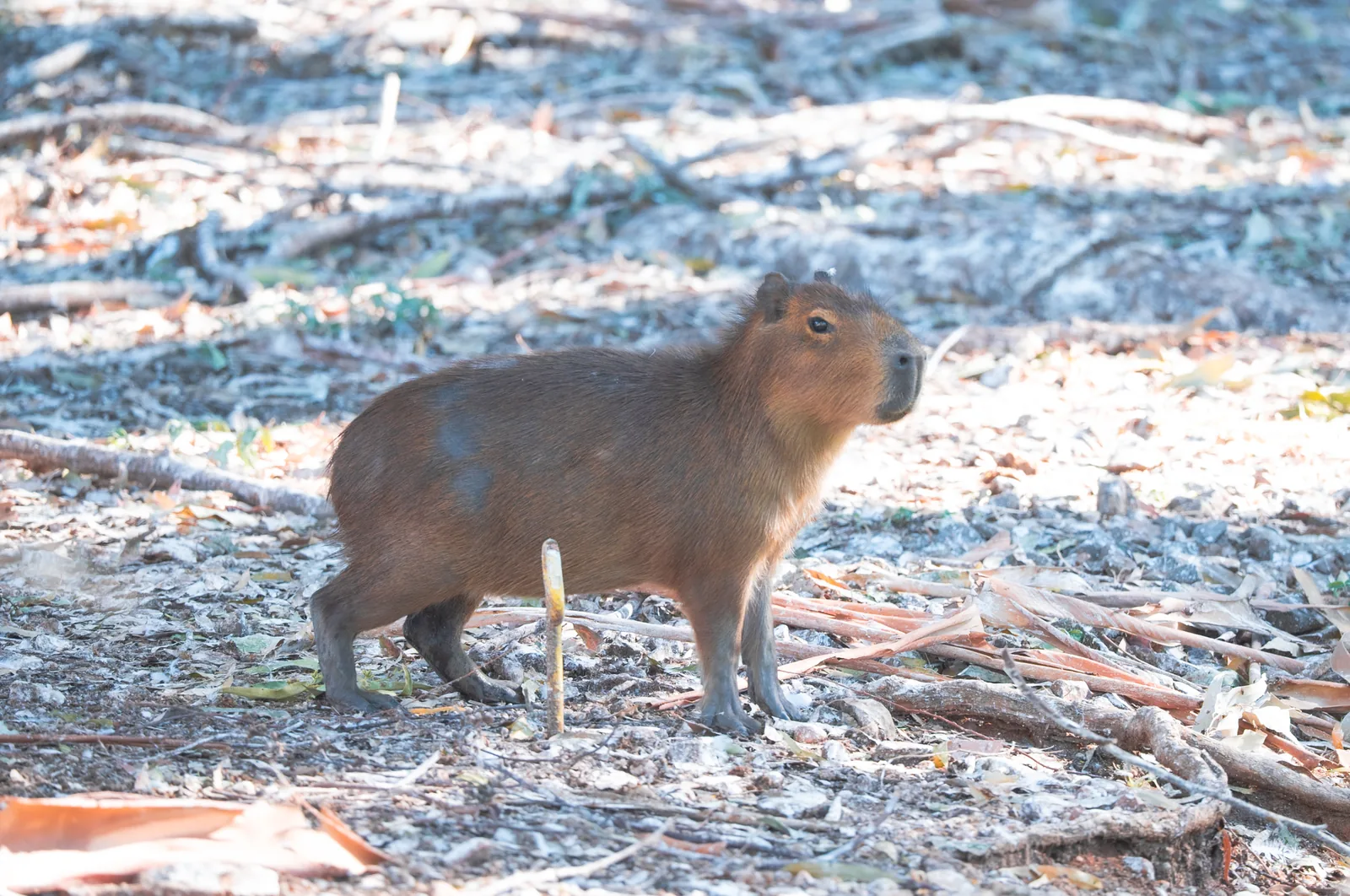
The capybara (carpincho), king of the riverbank
The capybara (carpincho, Hydrochoerus hydrochaeris) is the largest rodent in the world, a placid, barrel-shaped grazer that can weigh over 60 kg, and along the Uruguay River it is common. Families graze the wet margins of the river and of the reservoir behind the Salto Grande dam, slide into the water when startled and surface with just eyes and nostrils showing, like small brown hippos. Early morning and late afternoon along the riverfront and around the wetlands are the best chances, and one of the most reliable spots is Parque del Lago, beside the dam, where capybaras graze near the lake shore. In quiet places they let you watch from a respectful distance for as long as you like.
The greater rhea (ñandú), South America's ostrich
Nothing says pampas like a greater rhea (ñandú, Rhea americana) striding across open grassland. Up to 1.5 m tall, these flightless birds roam the ranches around Salto in loose flocks, often grazing among cattle. In spring the males, who do all the parenting, shepherd crèches of striped chicks (charabones) across the fields. Rheas are easy to see from the car window on any drive into the countryside, especially on the roads to the hot springs.
The pampas deer (venado de campo), the rare one
The pampas deer (venado de campo, Ozotoceros bezoarticus) is one of South America's most threatened mammals, and Salto holds its main stronghold in Uruguay: the grasslands of El Tapado, in the Arerunguá area of the department, protect the larger of the country's two remaining wild populations, around 800 to 1,000 animals. They belong to a subspecies described from here, Ozotoceros bezoarticus arerunguaensis, found nowhere else on Earth. Once counted in the millions across the pampas, this elegant, golden-coated deer is now a national conservation emblem, and the fact that its future runs through Salto is a quiet point of local pride.
The armadillo (tatú mulita) of the grasslands
The southern long-nosed armadillo (tatú mulita, Dasypus hybridus) is the campo's armoured digger, shy and mostly out at dusk, whose name means little mule for its long, mule-like ears. Its burrows and foraging scrapes are everywhere in sandy pasture, and with luck the animal itself trundles through the grass like a small wind-up tank before vanishing down a hole. Its larger cousin the hairy armadillo (tatú peludo) shares the same fields. Both are loved figures of Uruguayan rural folklore, so loved that Uruguay put its wildlife on its money: the mulita is on the 1-peso coin, the capybara on the 2 and the rhea on the 5.
The caiman (yacaré) of the Uruguay River basin
Yes, Uruguay has crocodilians. The broad-snouted caiman (yacaré overo, Caiman latirostris) lives in the warm creeks, lagoons and backwaters of the lower Uruguay River basin, basking motionless on mud banks with only its ridged back above the surface. It is retiring and not aggressive towards people, a fish, snail and crab eater, and after decades of protection its numbers are recovering. Quiet, sun-warmed inlets and the edges of wetlands in summer are the places to look for that prehistoric profile.
The river otter (lobito de río), the river's shadow
Where the water runs clear and quiet, the neotropical river otter (lobito de río, Lontra longicaudis) hunts fish and crabs along the Uruguay River and its wooded streams. Sleek, whiskered and endlessly curious, it is everything people love about otters, and seeing one is a matter of patience and silence rather than luck. A kayak drifting along a calm stream (arroyo) at first light, or a still hour on a fishing bank, may be rewarded with a glossy head rising above the surface to inspect you back. The signs on muddy banks are five-toed prints and droppings full of fish scales on prominent rocks. The anglers you share the bank with are after the dorado: fishing in Uruguay means this river.
The tegu lizard (lagarto overo), the ranch's groundskeeper
The Argentine black-and-white tegu (lagarto overo, Salvator merianae) is Uruguay's biggest lizard, a handsome, intelligent reptile that can reach well over 1 m long. On warm days it patrols hedgerows, woodpiles and ranch gardens with a confident walk, hunting insects, eggs and fallen fruit. Country people traditionally tolerate the resident tegu as a snake-catcher and pest controller. In winter it disappears underground and comes out again with the spring sun.
Geoffroy's cat (gato montés), the spotted ghost
Geoffroy's cat (gato montés, Leopardus geoffroyi) is the campo's most beautiful secret: a spotted wild cat scarcely bigger than a house cat, patterned like a miniature jaguar. It hunts rodents and birds in the gallery forest and along brushy streams, almost always at night. Few visitors ever see one; a flash of spots in the headlights on a rural road is the classic encounter. But they are out there in healthy numbers, and knowing the pampas still has its wild cat changes how the landscape feels.
The foxes (zorros), two of them
Salto has not one fox but two. The pampas fox (zorro gris, Lycalopex gymnocercus) is the classic grassland trotter, silver-grey and fine-boned, often seen loping along fence lines in broad daylight. The stockier crab-eating fox (zorro de monte, Cerdocyon thous) prefers the wooded river corridors and comes out at dusk. Both are curious, adaptable and almost guaranteed on any evening drive through the countryside.
The maned wolf (aguará guazú), the ghost of the grasslands
And then there is the one nobody promises you. The maned wolf (aguará guazú, Chrysocyon brachyurus) is South America's tallest wild canid, a russet, black-maned animal on improbably long legs, built to see over tall grass, with a call like a deep bark rolling across the night. In Uruguay it sits on the border between zoology and myth. Since the first confirmed record in 1990, verified appearances number barely a handful: Río Negro in 1991, Rocha in the early 2000s, Cerro Largo in 2006 and 2007, lone wanderers crossing in from the wetlands beyond the borders, each one making the national news. The most recent confirmed record in the whole country was in Salto, in 2021. Country folklore has long tangled this animal up with the legend of the lobizón, the werewolf of the campo, because what else do you call a wolf-shaped shadow, taller than any dog, that appears once in a generation and vanishes? It is fully protected in Uruguay, harmless to people and livestock, and painfully shy. I will not tell you that you will see one. Almost nobody ever has. But the last one seen in Uruguay walked through this department, and knowing it might still be out there is part of what a night in the campo feels like.
Where and how to see them
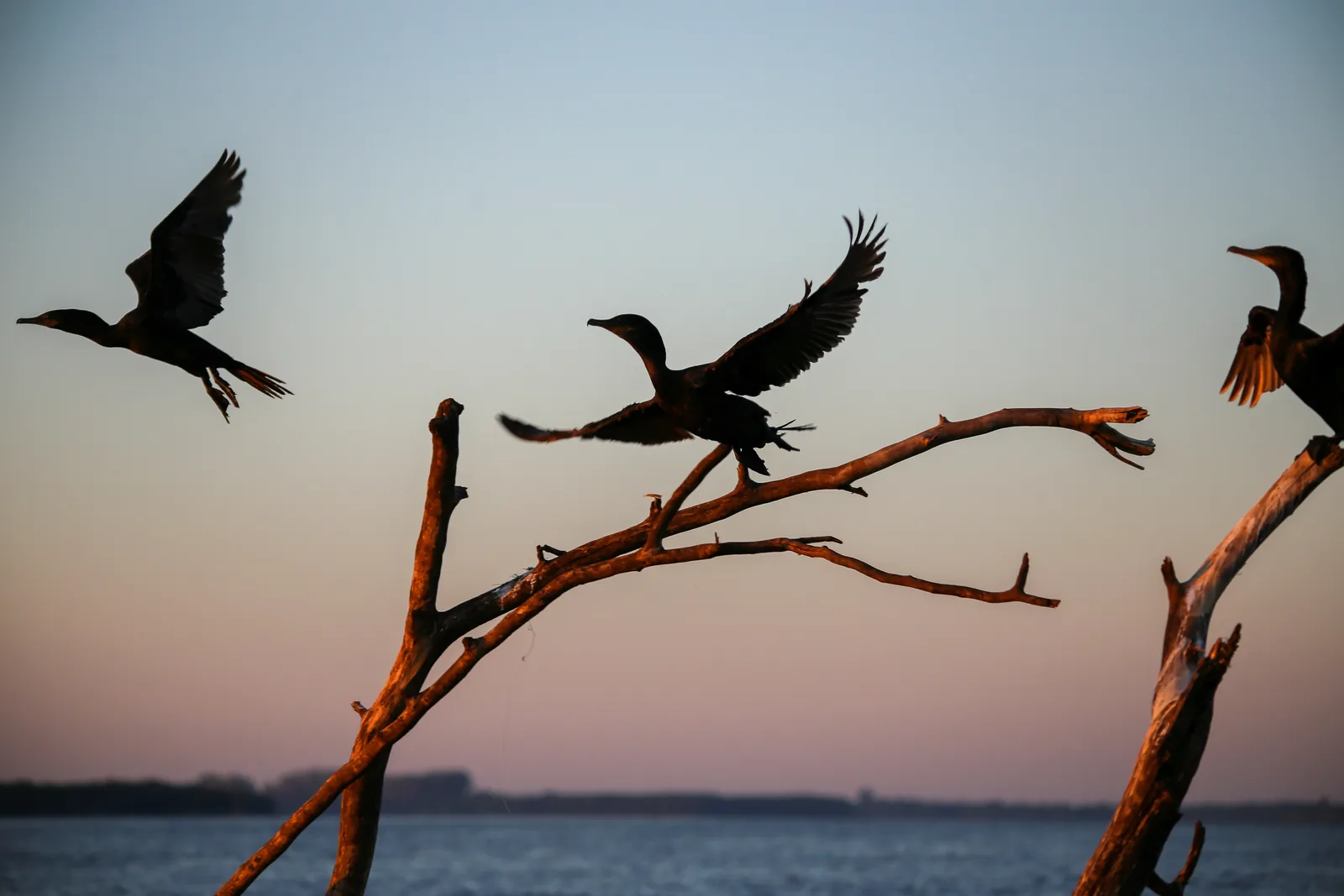
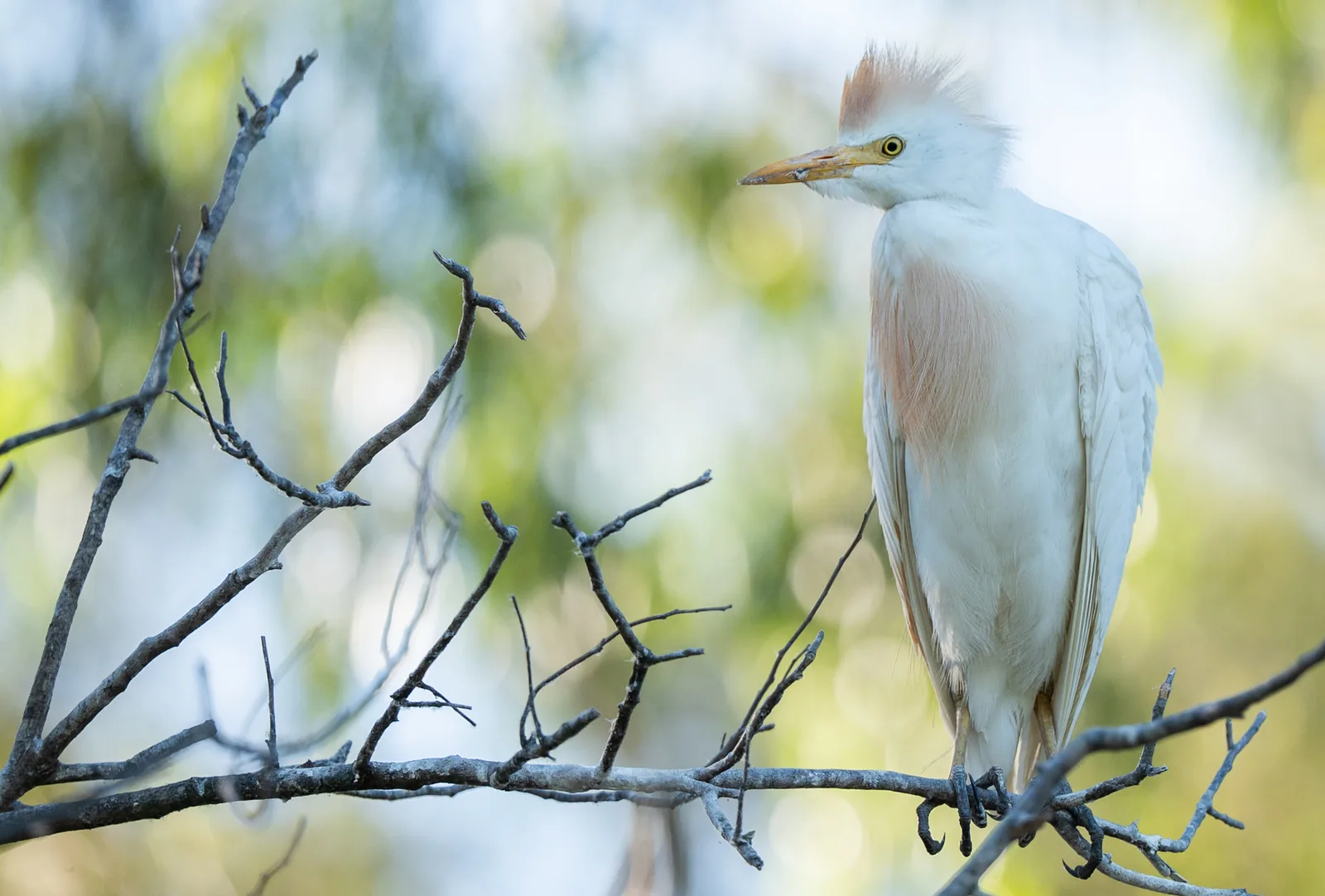
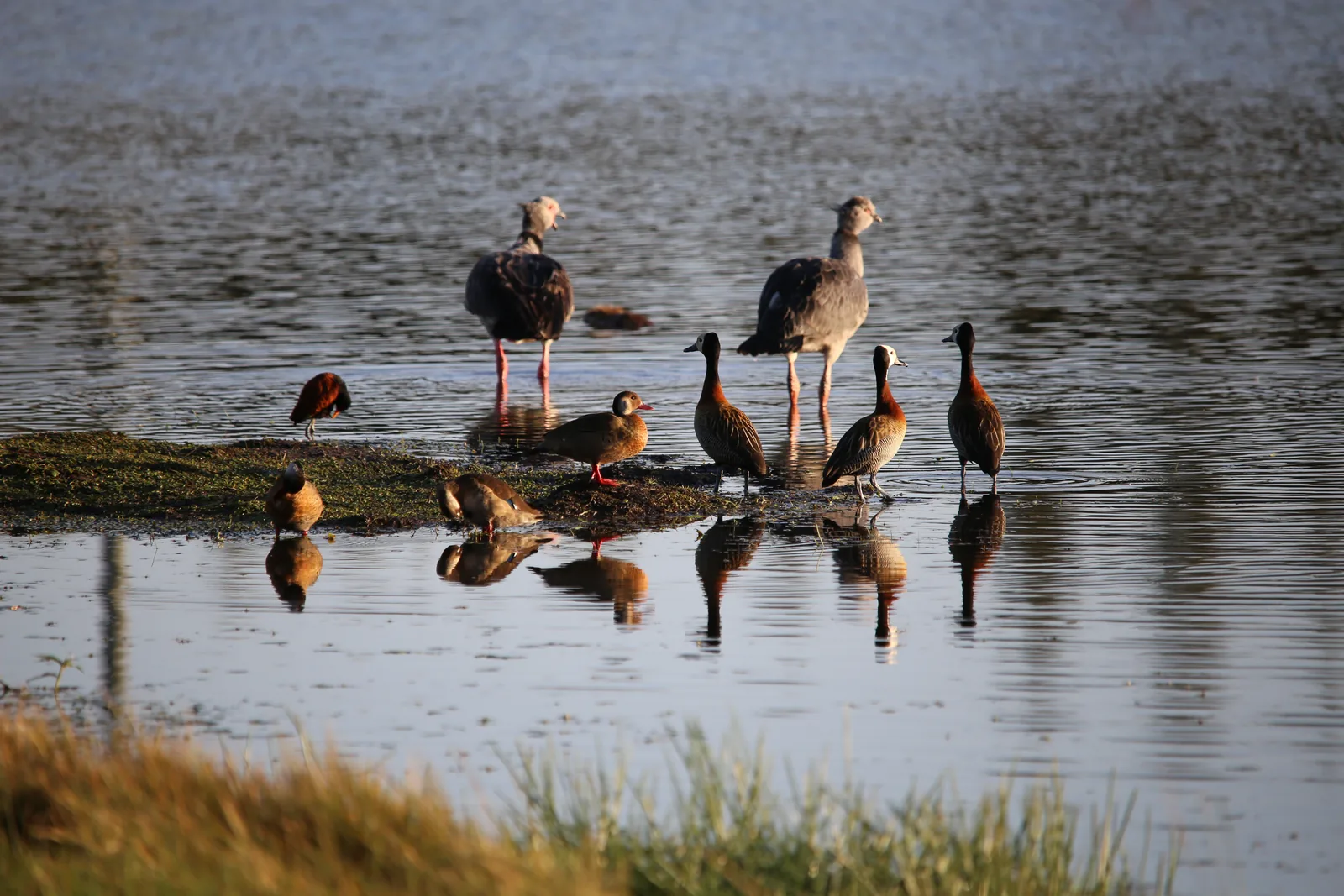
The recipe is simple: where the habitats meet, at the right hour. The riverfront and the wetlands at dawn for capybaras and caimans; open ranch country in daylight for rheas, armadillos and foxes; rural roads at dusk for Geoffroy's cat, with luck. Many ranches around Salto take day visitors and overnight guests, which puts you inside the habitat rather than beside it, and pairs naturally with birdwatching, because the same dawn that brings out the capybaras brings out 450 species of birds. Binoculars help, and so does keeping your distance.
In Salto, wildlife watching is not an excursion you book. It is what happens the moment you step out of town.