
Salto, Uruguay · South America
TERMAS
DEL DAYMÁN
The hottest hot springs in Uruguay. The water rises from 2,204 m down in the Guaraní Aquifer, comes out at up to 46 °C and carries a long list of minerals with it.
The hot springs
most people come for
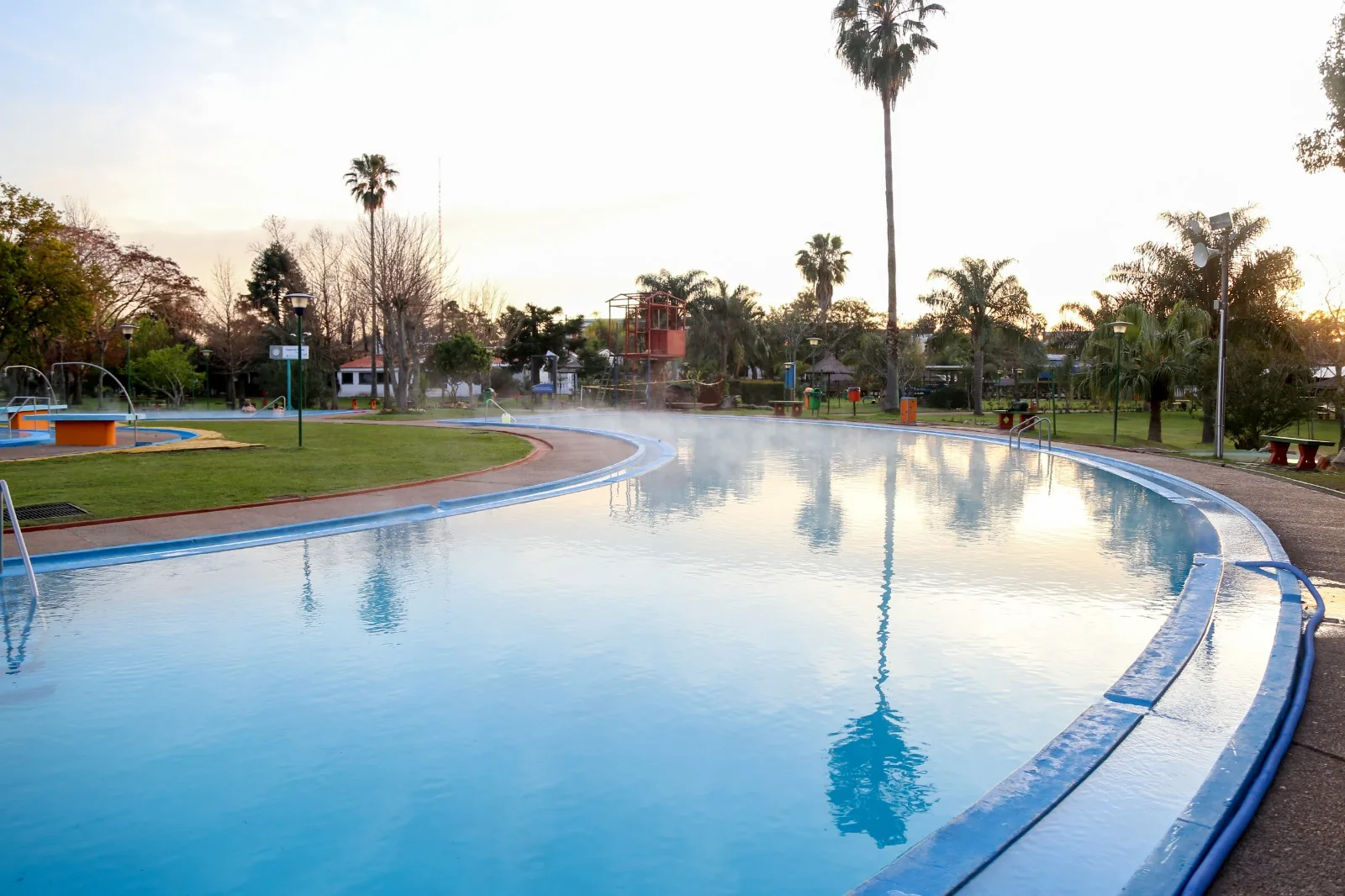
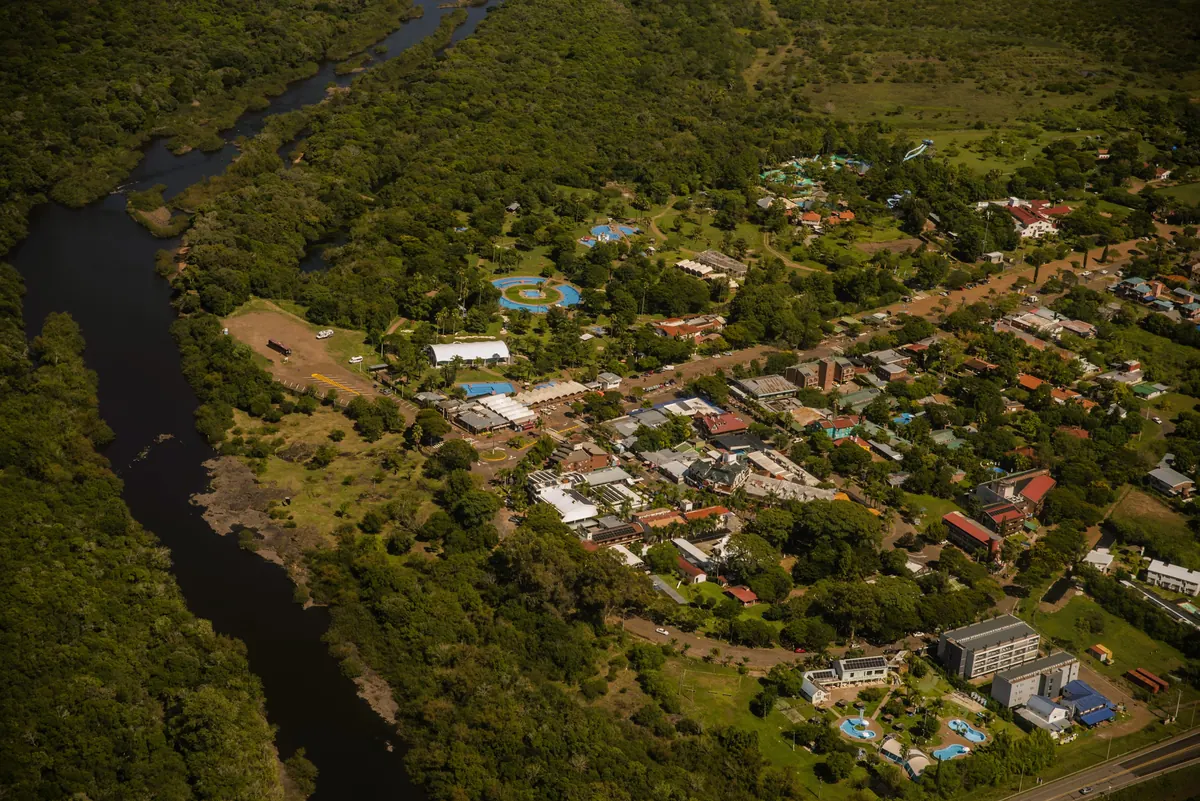
Termas del Daymán is 10 km south of Salto, Uruguay's second-largest city, and it is the hot springs most visitors come for. The water comes from the Guaraní Aquifer (Sistema Acuífero Guaraní, or SAG), one of the largest underground reserves of fresh water in the world, and surfaces at up to 46 °C, the hottest in Uruguay. The pools sit on the bank of the Daymán River, among palms, with open country all around.
"The hot springs of Daymán represent a before and after in Salto's tourism — a strategic public-private alliance that turned underground heat into the 'thermal capital' of Uruguay."
— Campodónico & da Cunha, Historia del Turismo en Salto, 2010 · cited in Balnea, Vol. 12, 2026
Daymán, Agua Clara, Arapey
or San Nicanor?
Salto has several hot springs, not one, and the first question most visitors have is which to choose. The short answer: Daymán for the hottest water and the most to do, Agua Clara for quiet, Salto Grande for children, Arapey for a resort stay in open country, and San Nicanor only if you sleep there.
| Hot springs | From Salto | Water at source | Entry | Go for |
|---|---|---|---|---|
| Termas del Daymán | 10 km south, on the Daymán River | 46 °C, the hottest in Uruguay | UYU 200 (about US$5) at the gate, 8am to 10pm, every day | Most people: 11 pools, hotels and restaurants, the Acuamanía water park next door, families |
| Parque Termal Agua Clara | 7 km, on the same river | 45 °C | UYU 300 (about US$8) at the gate, 8am to 10pm | Quiet: four large pools, hydrotherapy showers, massage and no water park |
| Parque Acuático Termas de Salto Grande | 15 km north, on the lake behind the dam | Hot-spring water from the Hotel Horacio Quiroga's own well | UYU 650 (about US$16), 10am to 6pm, every day of the year | Children: slides, a wave pool and a lazy river, open to everyone |
| Termas del Arapey | 80 km north, in open country | 39 °C, flowing since 1945 | Municipal pools paid at the gate; Altos del Arapey is all-inclusive | A stay of two or three nights: municipal pools, a campground, a five-star golf resort |
| Termas de San Nicanor | In the campo south of the city, near Estancia La Aurora | Hot-spring pools on an estancia | Hotel and camping guests only, no day visits | A night in hot water in the middle of the countryside |
Prices from the parks' own lists, October 2026; they change with the season. Hotel Horacio Quiroga, Altos del Arapey and Hotel Los Naranjos have their own pages in Stay.
Found by accident
Nobody was looking for water. The drill that found it was looking for oil.
ANCAP, Uruguay's state oil company, drilled beside the Daymán River in search of petroleum. At 2,204 m the drill found hot water instead, under pressure and in volume, rising from the Guaraní Aquifer, which lies beneath Argentina, Brazil, Paraguay and Uruguay. At the surface it came out at up to 46 °C, the hottest documented in the country.
The land, which had belonged to the Diocese of Salto, passed to the Intendencia, the city hall. The first bathing pavilions opened and the site was licensed for public use.
Pools, changing rooms, accommodation and services were built up through the decade, and the area became a planned resort drawing visitors from across Uruguay, Argentina and Brazil.
Daymán now has 11 pools, a medical hydrotherapy centre, the Acuamanía water park next door, hotels and spas, all on water whose properties have been analysed and published in international journals.
What is in the water
Daymán's water is not just hot. An analysis published in Balnea (Vol. 12, 2026) by the University of the Republic found a set of minerals at concentrations that meet or exceed the therapeutic thresholds used by the Spanish School of Medical Hydrology at the Complutense University in Madrid. The water is colourless and odourless, and you can drink it.
The main pair of ions. Bicarbonate waters are linked to lower inflammation, better hydration and easier digestion when drunk.
Linked to lower inflammation and to the skin. Silica-rich waters have a long history in European spa medicine for skin conditions, inflamed joints and connective tissue.
Linked to bone and joint metabolism. Boron is increasingly studied for its part in lowering the markers of arthritis and supporting bone density.
A natural mood regulator. Even in traces, lithium in drinking water has been linked in population studies to calmer mood, lower stress and protection of the nervous system.
Nourishes bone, adding to the water's effect on muscles and joints. Of most interest to older visitors and to anyone with osteoporosis.
A trace element with a possible effect on metabolism, still being studied for its part in insulin sensitivity and blood sugar.
Essential for tissue repair and the immune system. Zinc matters in wound healing and skin repair, which is part of why Daymán has a name for the skin.
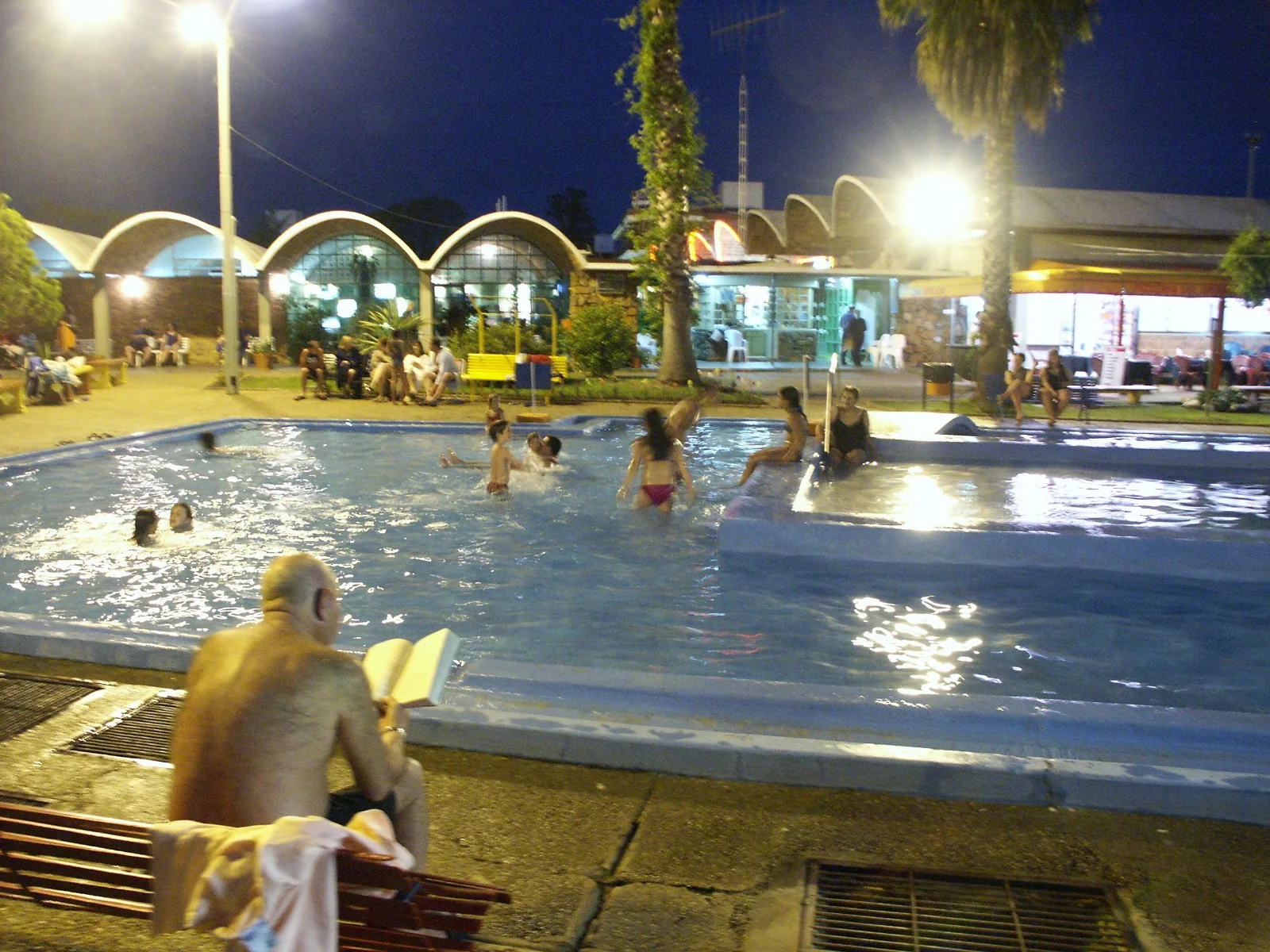
The pools are kept at 35 to 42 °C in winter and 35 to 38 °C in summer. Above 33 °C is the accepted minimum for a bath to have a therapeutic effect.
What the water
is used for
Daymán's water has been used for rheumatism and arthritis since the pools opened. Heat, buoyancy and minerals each do part of the work. This is what the research and the tradition say.
Circulation
A bath at 38 to 42 °C widens the blood vessels, improves circulation to the hands and feet and lowers blood pressure. Regular bathing has been shown to lower the resting heart rate and improve the tone of the vessels.
Joints and muscles
This is what Daymán is known for. Heat, buoyancy, water pressure and the minerals the body absorbs, boron and strontium among them, take the load off the joints and ease chronic pain.
Stress and sleep
The calming effect is well documented. Trace lithium, warmth and the shift of the nervous system into rest mode that comes with a hot bath all lower cortisol, help you fall asleep and measurably lift the mood.
Skin
The silica and the alkaline bicarbonate soften and hydrate the skin, help wounds heal and have a tradition of use for mild psoriasis and eczema.
Rehabilitation
The Complejo Médico Hidrotermal, the medical centre at the park, offers physiotherapy in the hot water under supervision, as part of recovery after surgery, sports injury or chronic pain.
Airways
Steam and inhalation treatments with the mineral water have a traditional use for the upper airways. The fluoride in the water, naturally at therapeutic levels, also helps the teeth.
The complex
One well in 1957 has grown into a resort with pools, hotels, a medical centre and a water park.
Kept between 35 and 42 °C, indoors and out, including the ozone pool and the hydrotherapy jets.
More than 3,000 beds, from camping, bungalows and chalets to hotels with their own hot-spring pools. The average stay is 3 nights.
The Complejo Médico Hidrotermal on site, with supervised bathing, physiotherapy, Scottish and Swedish showers, mud wraps and massage.
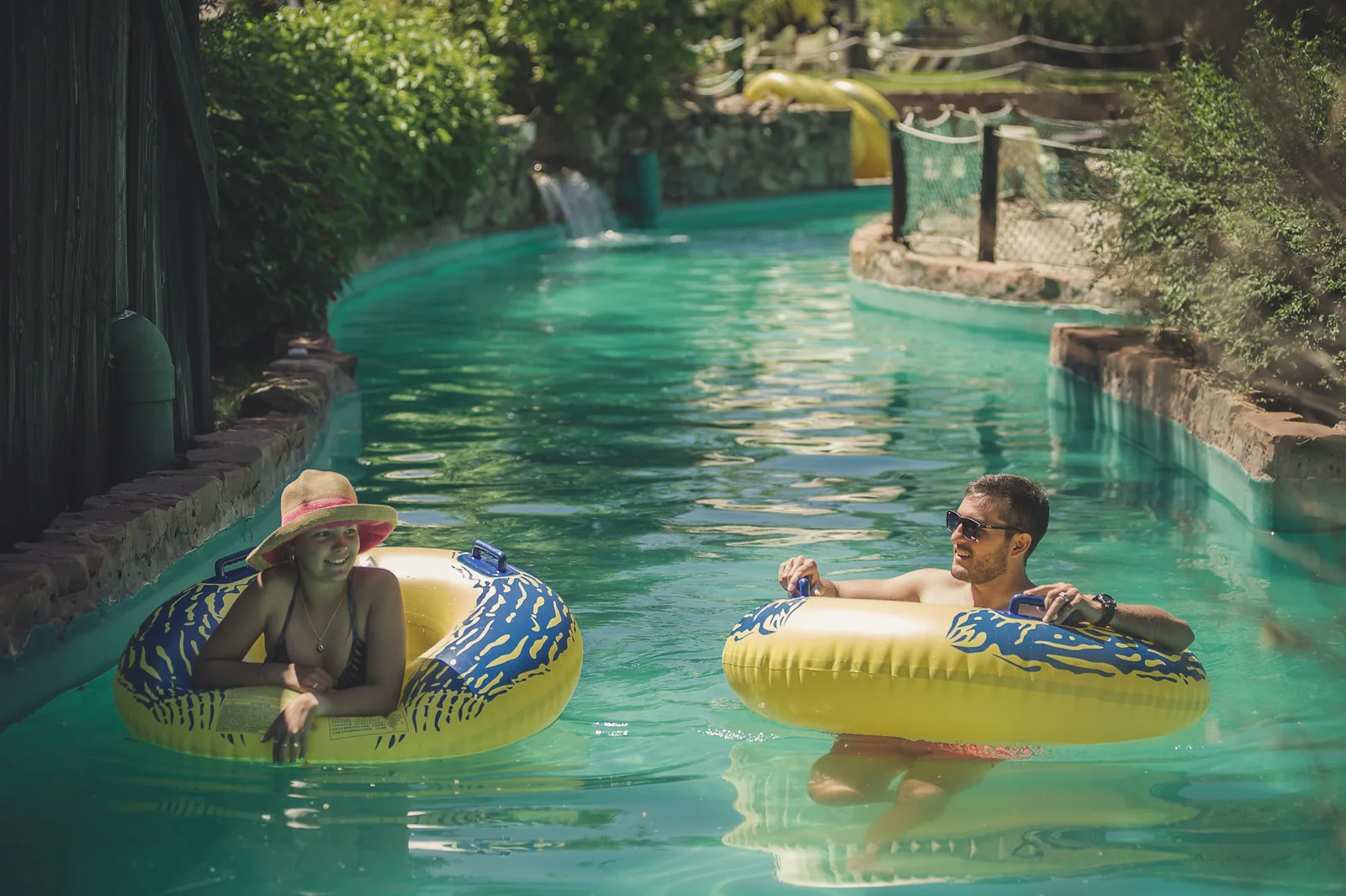
Uruguay's first hot-spring water park, next to the main complex: ten rides on the same warm water, from a lazy river to the big slide. Its own gate, its own ticket and its own season, 18 September 2026 to 28 March 2027, 10:30 to 18:30 on the days marked on its calendar. Rides, hours and tickets.
Facials, deep-tissue massage, aromatherapy and hydrotherapy circuits. Several hotels sell all-inclusive packages built around them.
Restaurants and grill houses (parrillas) serving Uruguayan food, grass-fed beef and homemade pasta, in the complex and around it.
The park borders the Daymán and the Uruguay River: sandy beaches, palm groves, birdwatching and walking trails, all within reach of the pools.
Children's pools, shallow areas and family bungalows make Daymán the most family-friendly of Salto's hot springs, for groups of all ages.
Who comes
The Vademécum de Aguas Minerales Termales del Uruguay (Balnea, 2026) describes the typical visitor to Daymán.
Mostly Uruguayans, then Argentines and Brazilians, with a growing number from Europe and North America.
An average of 3 nights. About 75% plan the trip themselves, arrive by car and come as a family, 5 people on average.
Rest, relaxation and physical recovery first. Time with the family, and treatment for joint and muscle conditions, come next.
Open all year. Winter is the best time for the contrast: cold nights and pools at 40 °C. Summer, December to February, is lively and the busiest. April to June and September to November give the best balance of weather and quiet.
Hours, prices and how to get there
Getting there
10 km south of Salto, on the Daymán River
By air: Paranair's Montevideo–Salto flights are suspended (October 2026). The alternatives are on Getting there.
By bus: Direct coaches from Montevideo (5 to 6 h), Buenos Aires and Porto Alegre to the Salto terminal, then the local bus or a taxi to Daymán (official taxi fares and a calculator).
By car: Route 3 north from Montevideo, about 500 km.
Hours and prices
Municipal park: 8am to 10pm, every day of the year, public holidays included.
General UYU 200 (about US$5) · Salto residents UYU 150 · under 12 UYU 120 · under 6 free · pensioners UYU 120. Paid at the ticket office, no bookings.
Spa Thermal Daymán (the spa complex attached to the park): Monday to Thursday 9am to 10pm, Friday to Sunday 8am to 10pm. General UYU 280 · residents UYU 250 · hotel guests UYU 200 with a voucher.
Acuamanía (separate ticket, seasonal): 18 September 2026 to 28 March 2027, 10:30 to 18:30 on the days marked on its calendar. Tickets at acuamania.uy.
What to bring: swimwear, a towel, sandals and sunscreen. Robes and towels can be hired, and many hotel packages include them.
Hours and prices: Intendencia de Salto, Agenda Salto, October 2026. They change with the season.
Contacts
Main complex: +598 736 9711
Mini terminal: +598 736 9008
Salto tourist office: +598 732 9898
Questions about Salto: my contact details are at the foot of the home page.
Nearby
Parque Termal Agua Clara: the quiet hot springs, a few minutes away on the same river
Termas del Arapey: 80 km north. Quieter, with a five-star golf resort, and the oldest hot spring in Uruguay, flowing since 1945
Salto Grande Dam: the hydroelectric dam Uruguay shares with Argentina, 30 km away, with free guided visits every day
Salto: restaurants, markets, the old centre, and Club Remeros, a private members' club with hot-spring pools of its own
Estancia La Aurora: the ranch (estancia) with the strangest reputation in Uruguay: sightings reported since the 1970s
What people ask
before they come
Termas del Daymán or Termas del Arapey: which is better?
They are different trips. Daymán is 10 km from the city, has the hottest water in Uruguay at 46 °C, 11 pools, hotels, restaurants and a water park next door, and it works as a day out from Salto. Arapey is 80 km north in open country, with gentler water at 39 °C, a municipal complex, a big campground and the five-star Altos del Arapey, and it is a stay of two or three nights rather than a day. With one day, Daymán. For a resort and quiet, Arapey. Two nights at each is a good pair: the lively one and the quiet one.
What is the best month for the hot springs in Uruguay?
There is no wrong month: the parks open every day of the year and the pools are kept at bathing temperature in every season, between 35 and 42 °C depending on the pool. Winter, June to August, gives the contrast most people remember, cold air and hot water. The fullest weeks are Easter week (Semana de Turismo) and the July school holidays, when the hotels fill; summer, December to February, is the lively season, with the water park open and families in the pools. April to June and September to November, on weekdays, give the best balance of weather and quiet.
Hot springs near Buenos Aires: how far is Salto?
Salto is 6 to 7 hours from Buenos Aires on the direct overnight bus from Retiro, which leaves at 11pm every day except Saturday, stops at Aeroparque and arrives in the morning; Daymán is then 10 km away. The quicker way in practice is one of the many daily buses from Retiro to Concordia, 5 to 6 hours, and then the hour across the river by local bus over the dam, or by the passenger launch (lancha) on Mondays, Wednesdays and Fridays. Humming Airways used to fly Aeroparque to Concordia in 45 minutes on Tuesdays and Thursdays; the route has been suspended since the end of July 2026. Every option is on Getting There.
Are there adults-only hot springs in Salto?
No public hot springs here is adults-only, but there is an adults-only hotel on the water: Raíces del Arapey, the old municipal hotel at Termas del Arapey, rebuilt and reopened in March 2026 with 54 rooms, no guests under 15, an indoor-outdoor pool of hot-spring water, breakfast included and no restaurant, and dogs up to 10 kg welcome. For a quiet day without a hotel, Agua Clara, 7 km from Salto, is open to everyone, children included, but it is the quiet one: four pools, one of them for children, hydrotherapy showers and no water park. At Daymán the hottest pool is in practice for adults, because children are kept out of it for the heat. If you want your own water, the resorts have pools of their own: the six at Altos del Arapey include a jacuzzi for adults at over 39 °C, and Hotel Horacio Quiroga has a tub of hot-spring water in every room.
Which hotels have their own hot-spring pool?
At Daymán, many of the hotels and apart-hotels within a walk of the park gate have a pool of their own. Two of the three places with a page in Stay have hot-spring water of their own: Hotel Horacio Quiroga at Salto Grande, 15 km north, with its own well, pools open around the clock and a tub of hot-spring water in every room; and Altos del Arapey, the five-star all-inclusive at Arapey, with six pools on its own water; and Raíces del Arapey, the adults-only hotel beside the municipal complex at Arapey, with an indoor-outdoor pool of hot-spring water of its own. The third, Hotel Los Naranjos, the country resort near Daymán, has two outdoor pools and a heated indoor one, but the water is heated, not from a hot spring.
"I never miss a chance to go to the termas when I have time off, on my own or with friends. Being in the hot-spring pool is one of the most pleasant and relaxing feelings I know."
— Visit Salto